The Psychology of an Earthy Home
An earthy home is less about terracotta vases and more about how your nervous system feels when you walk through the door. Before hunting for “earth-toned” cushions, it helps to understand what you are actually trying to create: a sense of groundedness, of being held by the space rather than stimulated by it.
In design terms, “earthy” usually means three things working together. First, the palette leans toward colors you might find on a quiet hike: clay, sand, deep greens, bark browns, soft stone grays. Second, textures echo the natural world, from rough linens to grainy woods, the way a forest floor never feels entirely smooth. Third, the rhythm of the room slows down. There is visual rest, negative space, and light that changes gently over the day instead of a flat, constant glare.
You do not need to remodel to get there. Walls can stay where they are; floors can remain whatever they happen to be. Instead, think in layers. An earthy room is built in thin, reversible decisions: the way light lands on a table, the fabric your hand touches when you sit, the objects your eyes pause on when you look up from your phone. Taken together, those details nudge your brain toward “outside,” even in a third-floor walk-up.
Begin by standing in the doorway of the room you want to shift. Let your eye travel across surfaces and notice where it catches and where it feels agitated. Harsh contrasts, shiny plastics, and a scatter of small objects all push the room toward a more synthetic energy. Your task is not to erase everything but to soften the edges, to add a bit more horizon line and a bit less visual noise. This is slow design, closer to gardening than to shopping. You will add, subtract, then live with the changes for a few days to see how the room behaves.
The most powerful tools at your disposal are light, color, and texture. Rearranging these three costs far less than new cabinetry, and often changes a room more dramatically than a fresh coat of paint. Think of it as recalibrating the atmosphere rather than redecorating the set.
Light, Color and Texture: Your Earthy Toolkit
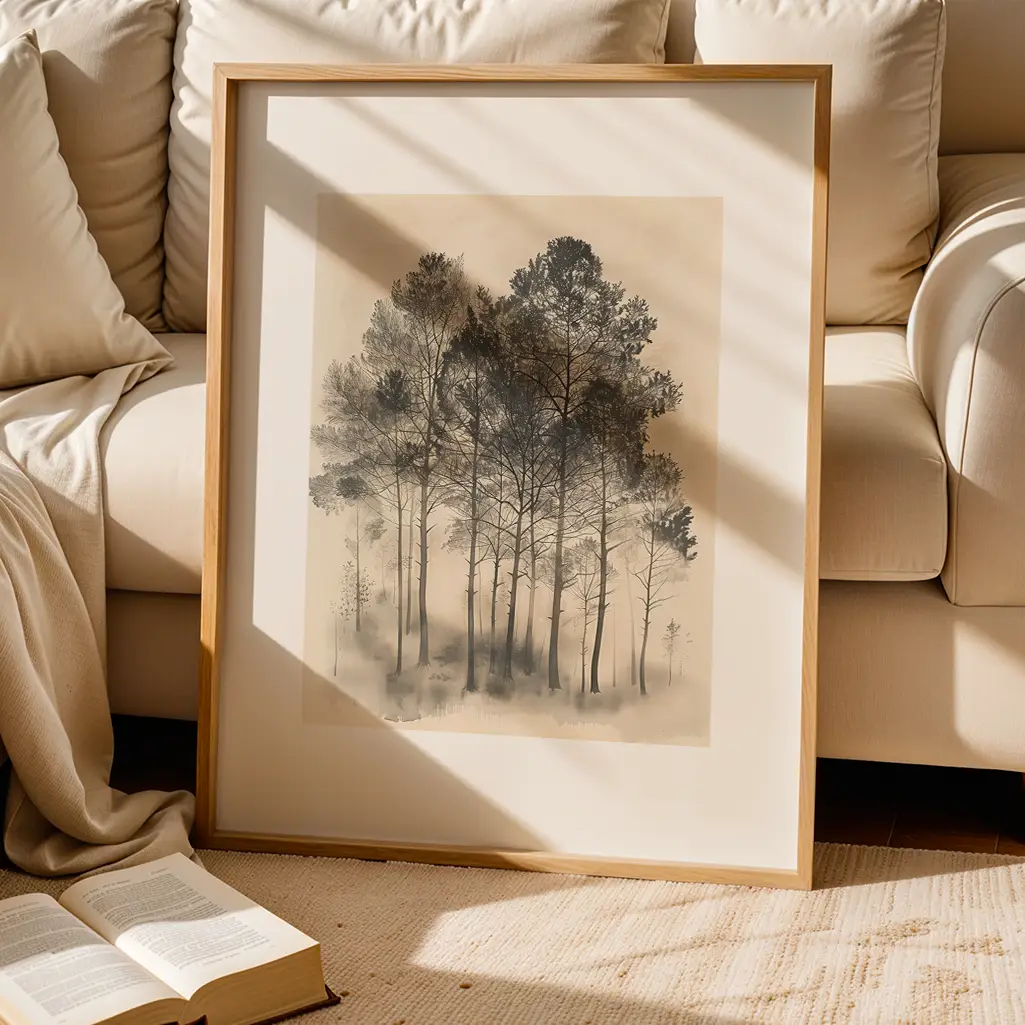
Light is the medium that reveals everything else, so start there. Daylight is inherently earthy; it carries the blues of the sky and the warmer tones of late afternoon. Instead of fighting it with blackout shades and cold overhead LEDs, try working with its patterns. If you have strong direct sun, filter it through simple, unlined cotton or linen curtains in an off-white or sand tone. The cloth will diffuse harsh beams into a gentle glow, closer to the light under trees than to a spotlight in a store.
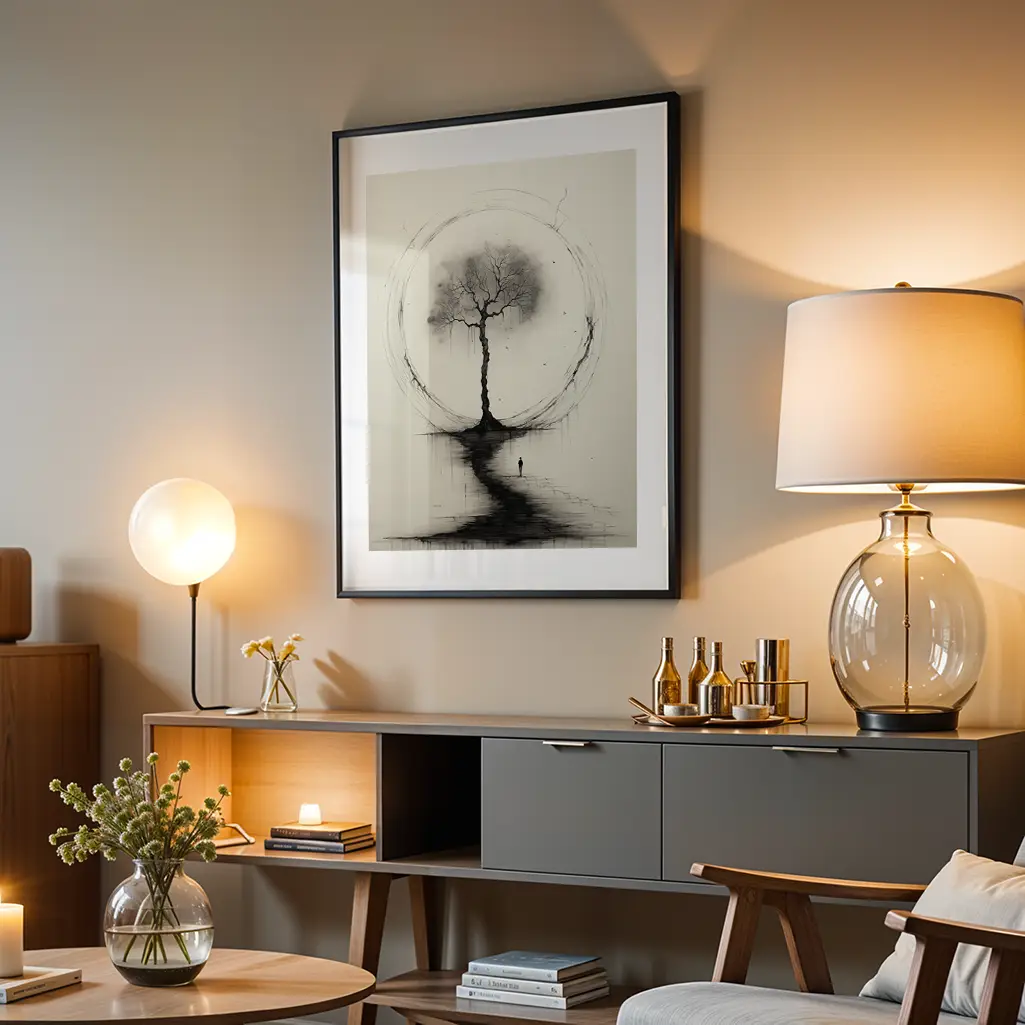
At night, think in layers rather than a single ceiling fixture. A table lamp with a warm-toned bulb on a sideboard, a floor lamp in a reading corner, a small light on the kitchen counter: together they mimic the way light pools around a campfire. Choose bulbs in a warm white range, and aim the light onto surfaces rather than into your eyes. When you dim the overall brightness, your home becomes a place to exhale rather than perform.
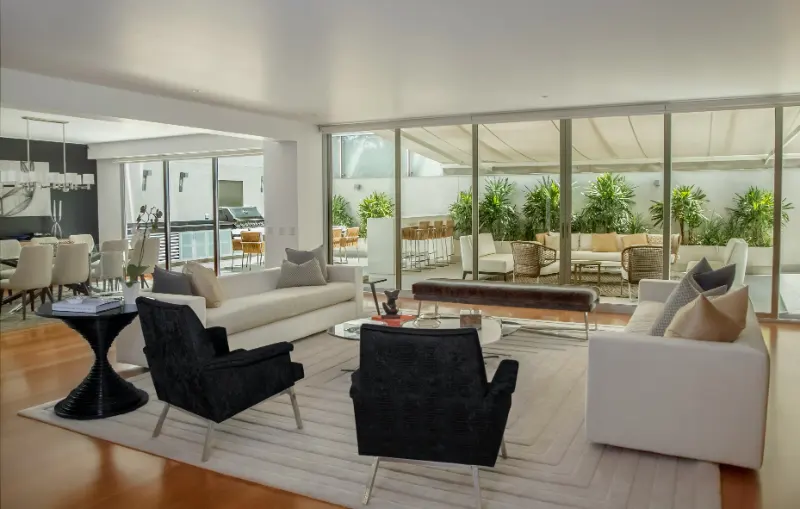
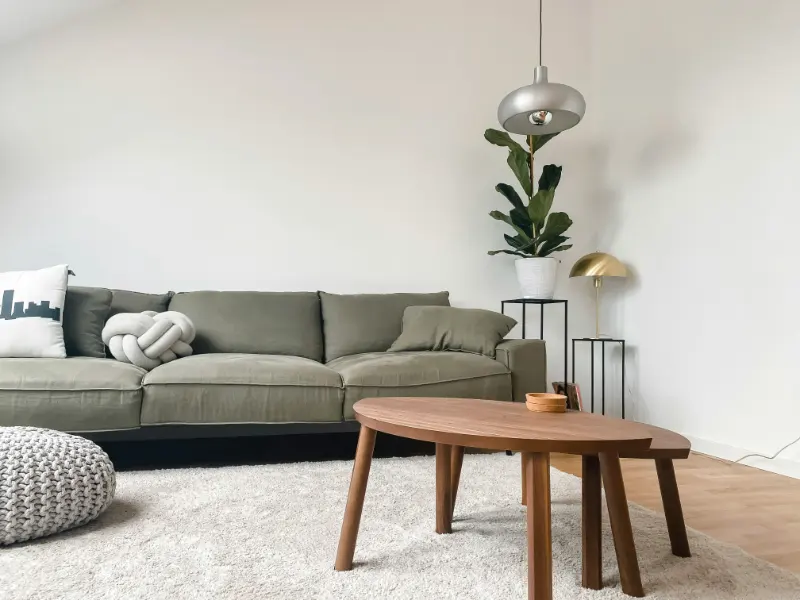
Color is where most people start, but in an earthy home, it becomes a quiet background instead of the main event. If your walls are already white or pale, you do not have to repaint; you can “earth” them through what you place against them. A jute or wool rug instantly grounds a floating sofa. Clay-colored cushions, olive throws, and a single dark wood piece can shift the mood away from clinical and toward calm. When you introduce color, think of soil samples: a limited range of browns, beiges, greens, and charcoal, repeated rather than scattered.
Texture is what makes all of this feel real to the body. An earthy room invites touch. Swap one synthetic throw for a nubby cotton or wool one, replace a glossy tray with an unglazed ceramic plate to corral keys, or rest a woven basket near the sofa for blankets. These do not need to be expensive design objects; they just need a tactile honesty. Imperfection is a feature, not a flaw. A slightly uneven glaze, visible wood grain, a frayed linen edge all echo the asymmetry of the outdoors and give your eye somewhere gentle to land.
If you think in terms of contrast, you can accomplish a lot with small edits. Pair a sleek dining table with chairs that have cane or woven seats. Drop a low, soft rug under a hard coffee table. Put a matte clay pot next to a glass vase. Your goal is a conversation between materials, the way rock and moss sit together along a river bank.
Objects, Rhythm and the Quiet Power of Restraint
Once the atmosphere is shifting, turn to what actually lives in the room. Earthy spaces are not empty, but they are selective. Instead of a dozen decorative items, choose a few that carry weight: a well-shaped branch in a simple vessel, a stack of books that genuinely absorb you, a bowl of fruit that will be eaten. Function and beauty are not at odds here; they are the same decision seen from two angles.
Bringing in plants is an obvious move, but how you do it matters. Rather than scattering one small plant on every surface, group a few together to create a mini landscape. Vary the heights and leaf shapes so they read as a small ecosystem instead of décor. If you are short on light or time, even one substantial plant, well-cared for, will feel more grounded than many struggling ones. The plant is less an accessory than a reminder of the pace you are trying to live at.
Rhythm in a room comes from repetition and pauses. Repeat colors and textures so the eye moves easily, and leave intentional gaps where nothing happens. A bare stretch of wall above a low console, an empty corner with only a floor cushion, a clear tabletop with a single object: these are the visual silences that make the earthy notes stand out. If every surface is speaking, the room feels anxious, no matter how many natural materials you use.
Editing can be the most transformative step, and it costs nothing. Remove a few items you have stopped seeing, then sit in the space that remains. You may discover that the room feels more grounded not because you added a rustic element, but because you subtracted the things that pulled you mentally back to your inbox. Earthiness, in this sense, is an internal alignment as much as a style choice.
The beauty of cultivating an earthy home without remodeling is that it remains flexible. As the seasons change, you can shift textiles, swap branches for fresh flowers, lean into candlelight in winter and open the windows wide in spring. Your space does not need to perform “nature” on a mood board; it only needs to support your own return to something slower and more present. Over time, those modest adjustments accumulate into a home that feels less like a sealed box and more like part of a living landscape, even if that landscape is framed by city sidewalks instead of pine trees.