The allure of the unfinished—and why it often feels cold
Industrial style was born in spaces that were never meant to be homes. Factories, warehouses and lofts offered high ceilings, exposed brick, visible pipes and expanses of concrete that felt radically honest. Nothing was hidden behind plaster, and very little was softened. When this language migrated into domestic interiors, it arrived with a kind of stark glamour, a visual shorthand for authenticity and creative life.But the same elements that make industrial spaces compelling can also make them feel unforgiving to live in. Raw concrete floors absorb light. Steel framing throws sharp lines and harder shadows. Brick walls drink in color and can deepen the sense of enclosure. Taken together, these surfaces amplify sound, chill the air and visually strip a room down to its bare essentials. What photographs beautifully in a magazine spread may, in daily life, echo when you speak and feel a few degrees too cool when you wake up.
Balancing industrial style with warmth is less about “hiding” those raw materials than about placing them in conversation with what they lack. Concrete is strong but visually heavy; it benefits from softness and tactility. Metal is precise and reflective; it needs something irregular and human beside it. Brick is rich but texturally dominant; it appreciates smoother neighbors. Instead of diluting the industrial character, the goal is to tune the atmosphere so the space feels like a home rather than a set.
The most successful industrial interiors understand sequence and contrast. They let you see the bones of the building, but they choreograph how you encounter them: a rough wall revealed at the end of a soft textile corridor, a steel beam framing a pool of warm lamplight, a concrete kitchen island topped with a well-worn cutting board. Warmth is not an aesthetic layer thrown on top; it is the emotional outcome of a series of deliberate design decisions.
Crucially, warmth in an industrial space is not only a matter of temperature or color. It is also about how a space behaves over time. Does it invite you to sit, read, cook, gather and leave traces of daily life? Or does it insist that you keep your coat on and your voice down? The way raw materials age, the way light moves across them, and the way sound reverberates all contribute to the answer. Thinking about these qualities from the beginning allows you to preserve the integrity of industrial style while making it genuinely livable.
Using texture, color and light to soften the edge
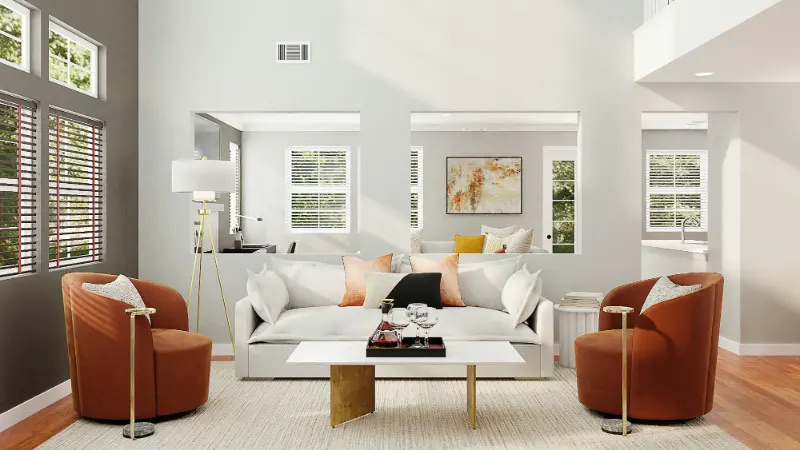
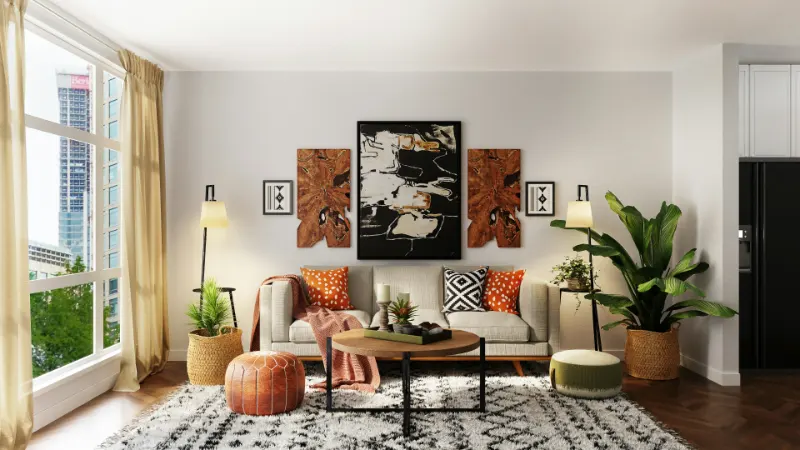
A raw interior, left alone, is mostly hard surfaces meeting at right angles. Warmth enters when you begin to introduce variation in texture, color and light, treating the room less like a fixed container and more like an evolving landscape. Texture is usually the most immediate lever. Against a steel-framed window, a linen curtain reads as a kind of visual breath. On a concrete floor, a wool rug stops sound and adds a tactile pause underfoot. A leather sofa, even in a pared-down silhouette, can feel like a bridge between the severity of metal and the informality of fabric.Color in industrial spaces tends to skew toward the grayscale: the blue of cold steel, the brown-red of brick, the dust of raw plaster. Rather than fighting this palette, it often works better to inflect it. Warm whites with a hint of cream soften the transition from brick to ceiling. Earth tones—tobacco, rust, ocher, olive—echo the existing materials without disappearing into them. Even small accents, like a terracotta pot on a windowsill or a mustard throw on a charcoal armchair, can tip the overall impression from austere to inhabited.
Light is where industrial spaces can transform most dramatically. Tall windows and open spans are gifts, but without modulation they can make a room feel washed out by day and cavernous at night. The key is layering. Overhead fixtures, especially if they reference factory lighting with metal shades or exposed bulbs, establish the industrial vocabulary. Yet relying on them alone tends to flatten everything. Adding table lamps, floor lamps and wall sconces at different heights creates pockets of intimacy within the larger volume.
The quality of light matters as much as its placement. Warmer color temperatures calm the glare of concrete and steel, turning hard edges into silhouettes rather than outlines. Dimmable fixtures let you move from the bright precision of a workday to the softer glow of evening. Even the choice of shade material—opal glass instead of bare filament, fabric instead of metal mesh—adjusts how much the eye relaxes in the room. Light, in this sense, functions like a form of editing. It lets certain raw details recede while others—perhaps a brick arch or a weathered beam—step forward as the quiet protagonists of the space.
Over time, these adjustments accumulate into a distinct mood. The industrial bones remain visible, but they are no longer the only story. A beam becomes a backdrop to a reading chair; a concrete column frames a dining table that glows in the evening. The sharpness of the architecture is still there, but it is tempered by gradients of softness, by color that feels lived in rather than staged, and by light that responds to the rhythms of the day.
Designing for comfort without losing the industrial spirit
The challenge, finally, is philosophical as much as visual. Industrial style prizes honesty of materials, clear structure and a refusal of unnecessary ornament. Comfort, meanwhile, often seems to arrive wrapped in cushions and covered in fabric. Bringing the two together requires a shift in how we define comfort. Instead of reading it as visual abundance, you can treat it as a question of ease: how intuitively a space supports the way you move, rest and work inside it.Furniture becomes the mediator between raw shell and daily life. Clean-lined pieces with solid wood frames, for example, echo the straightforwardness of industrial construction without feeling brittle. A dining table with visible joinery can sit comfortably beneath a steel beam, sharing its directness while softening its severity. Chairs with slim profiles but generous seats respect the room’s open geometry and still invite lingering over a meal.
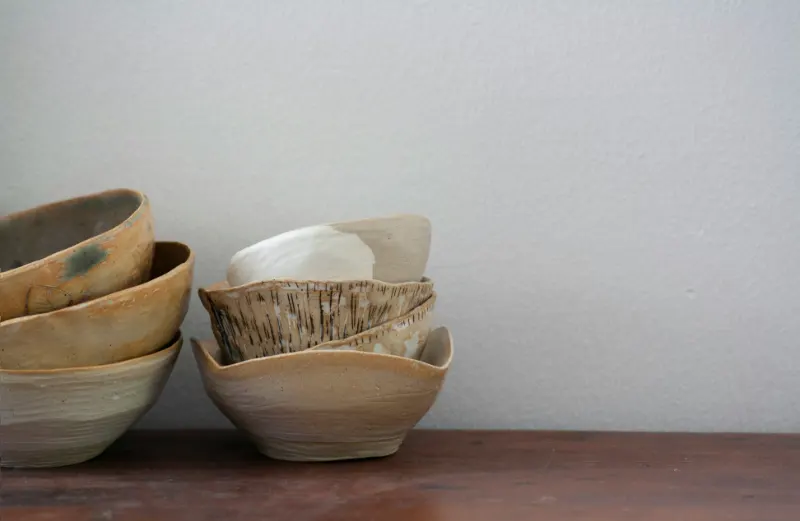
Storage is another place where the industrial spirit and domestic needs meet. Open shelving in metal and wood recalls factory racks, but what you place on it changes the emotional temperature. Stacks of books, ceramic bowls, even a well-used cast-iron pan introduce irregularity and narrative. The goal is not to stage perfect vignettes, but to allow real objects to accumulate in ways that remain legible and relaxed. In this sense, “clutter” becomes character, as long as it is given structure.
Acoustics are an often overlooked aspect of comfort in industrial interiors. Hard, reflective surfaces bounce sound, making conversations feel sharper and more public. Strategically placed textiles—curtains, upholstered panels, even a densely filled bookcase—act as quiet counterpoints. They absorb and diffuse noise, turning echo into murmur. The room becomes not just a place you admire, but one where your own voice feels at home.
Plants, too, play an outsized role. Against concrete and steel, they are almost shockingly alive. Their organic forms and shifting shadows break up the rectilinear logic of the architecture. A single large plant in a corner can soften the junction of two walls; a row of smaller ones along a sill links interior and exterior light. They are, in a way, the most literal embodiment of the balance you are trying to achieve: rooted, responsive, quietly evolving.
What emerges, when these elements are patiently layered, is a version of industrial style that does not feel like an aesthetic pose. It is a home that acknowledges its structural bones while allowing the softer dimensions of life—conversation, rest, mess, memory—to collect around them. The raw materials remain unmistakable, but they are no longer the final word. They become, instead, the grounding note in a composition tuned toward warmth.