The quiet power of materials in a Japandi home
In a Japandi space, the room rarely announces itself. There is no heroic sofa demanding attention, no gallery wall jostling for your eye. Instead, what you notice first is quieter: the warmth of a pale oak tabletop under your hand, the solid weight of a ceramic mug on its surface, the way light travels calmly across a limewashed wall.
Japandi is often summarized as a marriage of Japanese wabi-sabi and Scandinavian hygge, but that oversimplifies what actually shapes the atmosphere. The mood is not a paint color or a specific furniture silhouette. It is the materials you live with every day and the way they interact with light, time and touch.
Think of materials here as the room’s emotional vocabulary. Japanese aesthetics favor natural imperfection, an appreciation for age and patina, and an almost moral respect for raw materials. Scandinavian design adds clarity, lightness and practicality, with a bias toward bright woods and a sense of visual cleanliness. When you combine the two, you get an interiors language that feels both grounded and clear, like a forest on a bright winter morning.
Designing a Japandi-inspired home, then, begins not with shopping lists but with noticing what things are made of. Plastics and glossy synthetics pull the room away from nature, reflecting light harshly and aging poorly. Natural materials, by contrast, receive light softly and grow more beautiful as they are used. They allow your home to age with you rather than fight against time.
The interesting question becomes less “Which style is this?” and more “How does this surface feel; how will it change; and how does it connect me to the outdoors?” Answering those questions honestly is often enough to steer you toward the right choices.
Wood, stone and earth: building the calm foundation
Wood is the backbone of a Japandi interior, but not all wood speaks the same language. Scandinavian spaces lean toward pale species such as ash, birch and light oak, which bounce scarce northern light around a room. Traditional Japanese interiors often rely on cedar, cypress and soft pines, appreciated not only for grain but for scent and the way they accept wear. Together, they create a palette of warm, light woods with visible texture and a matte or satin finish.
If you are choosing flooring, a pale oak plank with a subtle grain and minimal shine will quietly anchor the room. It lets furniture and textiles breathe while visually widening the space. Even in a small apartment, continuous wood flooring reduces visual noise, unlike patchworks of tile and laminate that chop the eye’s movement.
In furniture, solid wood pieces with simple profiles do the heavy lifting. A dining table with rounded corners and legs that feel almost tree-like is more in tune with Japandi than a glossy, veneered surface. Imperfections in the grain and small knots are allies, not flaws. They prevent the space from becoming a showroom and keep it firmly in the realm of the lived-in.
Stone brings gravity to all this lightness. In Japanese gardens, rocks are treated as characters with presence. In Nordic landscapes, cliffs and boulders shape entire horizons. Indoors, stone can be as humble as a slate tray on a wooden bench or as commanding as a honed limestone countertop. The finish is critical. Highly polished stone reflects like glass and can feel coldly luxurious; a honed or tumbled surface absorbs light, softening the contrast between stone and wood.
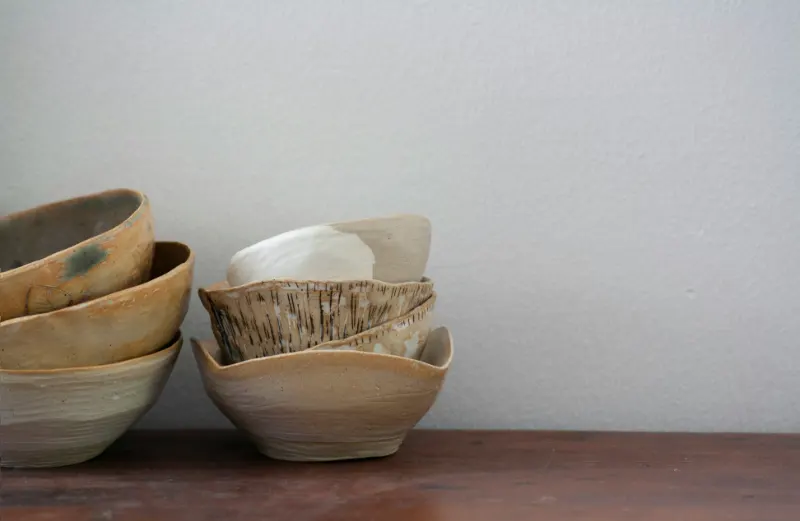
Even if your budget or rental contract limits you, you can introduce these natural notes through smaller moves. A travertine side table, a soapstone mortar left out on the counter, a low ceramic stool that doubles as a plant stand, all serve as grounded punctuation in a room otherwise made of softer materials.
Wall finishes are another quiet frontier. Japandi schemes often favor warm whites and soft neutrals, but the most successful are rarely flat. Limewash, clay plaster or even carefully applied matte paint with slight variation creates a surface that feels more like paper or stone than plastic. Under changing daylight, such walls shift gently, making the room feel alive rather than staged.
The underlying principle is restraint. Instead of many different surfaces competing, a few honest materials repeat: one primary wood tone, one family of stone, a consistent approach to wall texture. This repetition builds calm. When you enter, your eye is not asked to solve a puzzle; it is free simply to rest.
Fibers, light and the everyday ritual of touch
If wood and stone are the bones of Japandi, natural fibers and light are the skin and breath. They are what you feel most directly against your body, and they soften the structural clarity of the room.
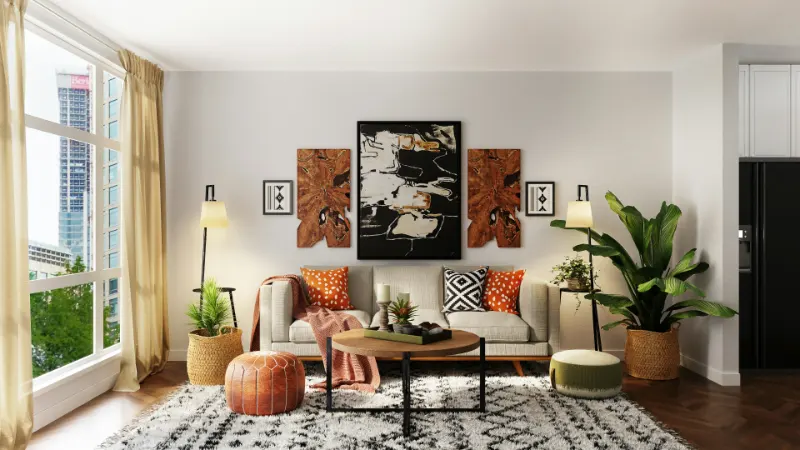
Textiles in this style rarely shout. Think linen with its small, irregular slubs; cotton in a tighter, more tailored weave; wool that feels substantial but not shaggy. In Japanese interiors, there is a tradition of layering thin fabrics, like the translucent shoji screens that filter light and soften edges. Scandinavian homes rely on textiles to bring warmth to long winters. In a Japandi home, you might echo both approaches by draping a linen throw across a bench, using cotton cushions in quiet, earthy tones, and choosing a flatwoven wool rug that adds texture without dominating the floor.
Again, the surfaces should invite touch. A cushion cover that wrinkles slightly, a rug with a dry, tactile feel under bare feet, curtains that move with the faintest breeze all reinforce the connection to the outdoors. Synthetic blends that are too smooth or too glossy can break the spell. They often reflect light sharply and feel slick, introducing a visual temperature at odds with the rest of the room.
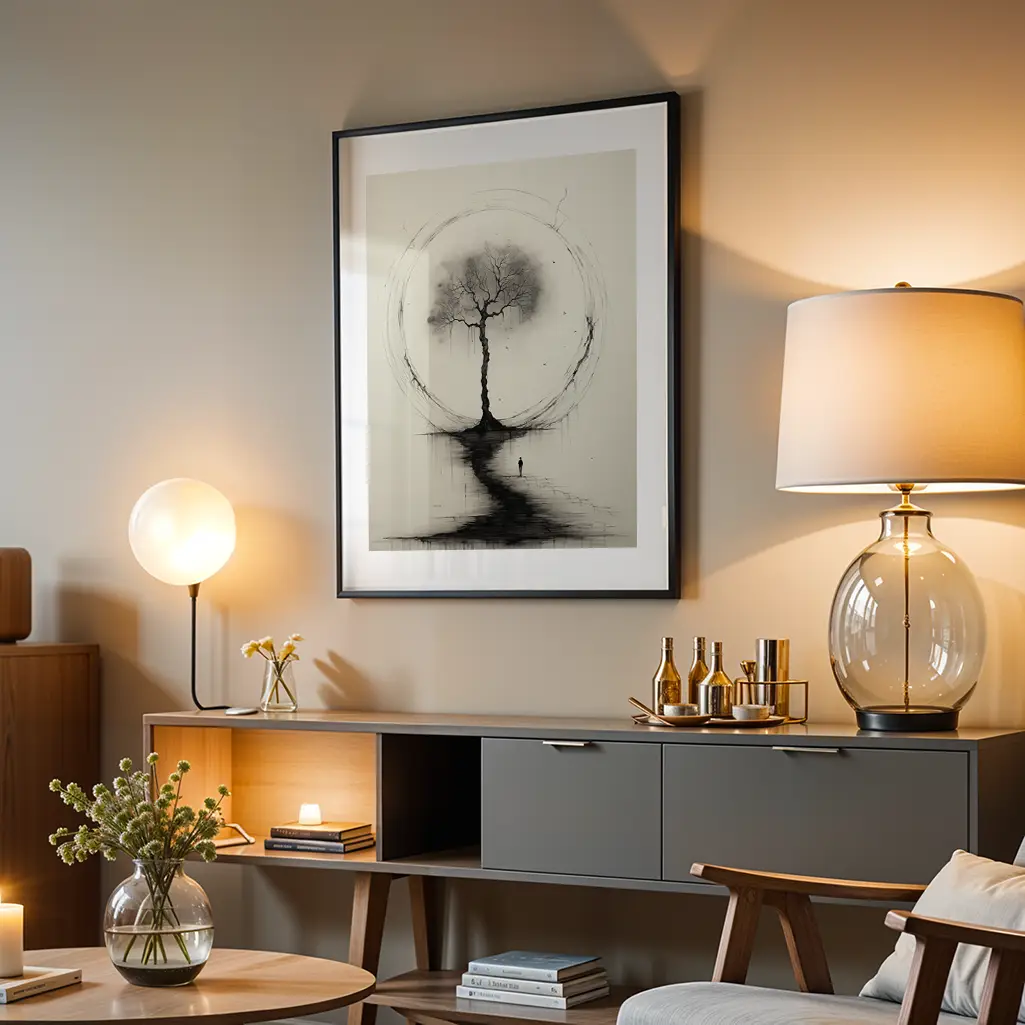
Lighting itself behaves almost like another material in Japandi interiors. Instead of a single bright ceiling fixture, the light is layered and directional, more like sunlight filtering through branches than a spotlight on a stage. Paper lanterns, fabric shades and diffused wall lamps all turn hard bulbs into soft, glowing forms. Even when a fixture is metal, pairing it with a linen shade or frosted glass keeps the mood gentle.
Here, the lesson from nature is simple: harsh contrasts feel artificial; gradual transitions feel human. By using warm color temperatures and shielding direct glare, you allow wood grain, plaster and textiles to reveal their subtleties. The home becomes a place where your eyes can relax, adjusting easily between task lighting and the soft gloom of evening.
Finally, there is the question of what you do not include. Japandi is not about empty minimalism but about meaningful editing. A single branch in a ceramic vase can have more presence than a dozen mismatched accessories. A woven basket near the door can quietly collect the day’s clutter, maintaining visual calm without demanding attention. Over time, this editing becomes a habit of mind. You begin to ask of each object not just whether it looks right, but whether its material, its feel and its aging process are in harmony with the rest of your space.
In that sense, designing a Japandi home is less about following rules and more about deepening your sensitivity. When you choose materials that honor nature and time, the room slowly organizes itself around them. The space becomes not a theme but an atmosphere, one you can feel in the way light touches a wooden table in the morning and in the way a linen curtain lifts when the window is cracked open to let the real outdoors in.