Why “Organic Modern” Feels So Right Now
Organic modern style is what happens when the quiet rigor of modernism loosens its shoulders and finally learns to exhale. It is not a theme and it is not a catalog spread; it is an attitude toward space that prizes calm, legible rooms softened by touchable materials and a nearly invisible sense of luxury.At its core, organic modern is a negotiation between two desires that often compete in the home. One is the modern instinct for order: clear surfaces, edited color, furniture that seems to float. The other is the human craving for warmth and tactility: wood that shows its grain, wool that feels slightly nubby underfoot, linen that wrinkles a little in the afternoon light.
Earlier versions of minimalism often resolved this tension by dismissing the second desire altogether. The result was the “don’t sit there” sofa and the all-white room that looked pure in photos but strangely airless in real life. Organic modern offers a different equation. Instead of more objects, it uses more presence: fewer things, chosen for how they feel, how they age, and how they participate in the light.
This is part of why it has become the most popular calm-lux look right now. In an era of constant digital saturation and visual noise, a room that reads in a single glance is a relief. But a room that also acknowledges the curve of a stone, the irregularity of a hand-thrown vase, the knot in a plank of oak, offers something more than relief; it offers a quiet conversation with the natural world.
There is also a cultural shift underneath the aesthetic one. “Luxury” has been gradually redefined away from glossy surfaces and overt labels toward experiences that feel restorative and private. In an organic modern space, the real luxury is not the object but what the object allows: a calm morning, an unhurried meal, a place where the light is allowed to be the most decorative thing in the room.
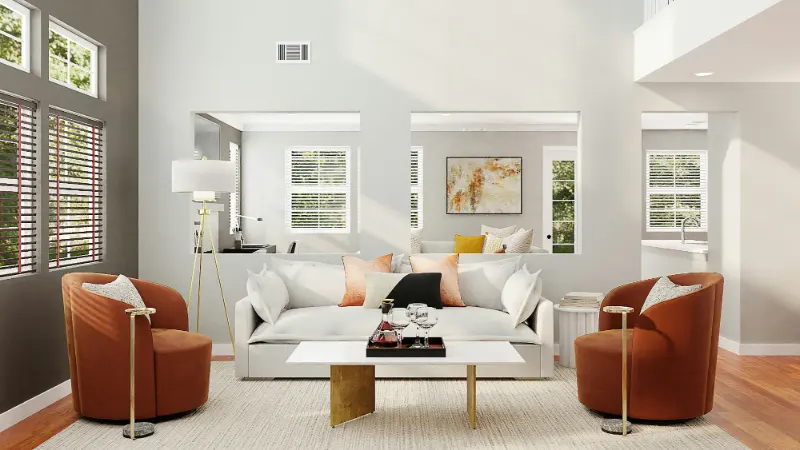
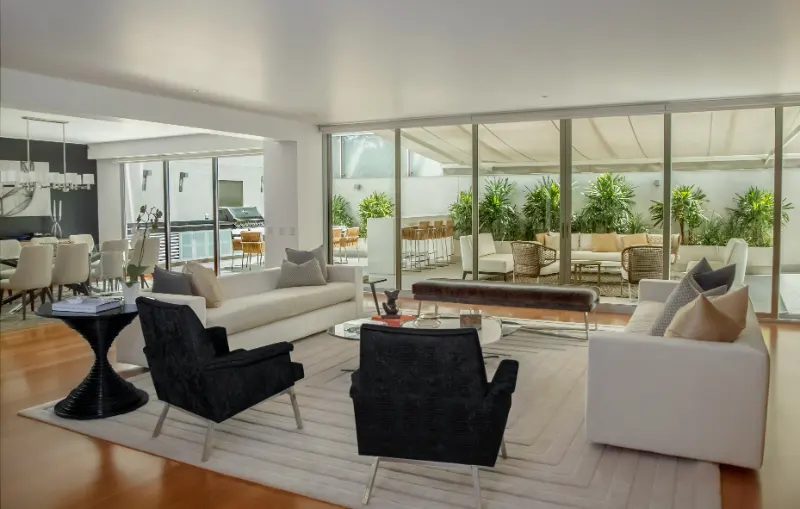
Designers talk less about statement pieces now and more about “rhythm” and “breathing room.” A single low, deep sofa in a textured fabric can do more work than three smaller ones if it allows the eye to rest and the body to fully recline. The calm-lux effect emerges not from perfection but from coherence, the feeling that everything in the space is participating in the same quiet sentence.
How to Read the DNA of Calm-Lux Spaces
To design a home in this style, it helps to think less in terms of shopping and more in terms of editing. Before adding anything, notice what the room is already saying. Where does the daylight fall most beautifully. What is the heaviest visual presence. Which objects are shouting, and which are whispering.Organic modern rooms often follow a few deep structural ideas, even if the details vary. The first is a muted, nature-derived palette. Whites shift toward cream, gray warms into greige, and wood tones are allowed to be themselves instead of forced into uniform stains. Color exists, but usually in low saturation: the green of sage instead of neon, the blue of a distant hill instead of a billboard. This soft chromatic range does something subtle to the nervous system; there is less contrast for the eye to manage, so the room feels slower and more grounded.
The second idea is what you might call “honest materials.” Instead of high-gloss synthetics, the calm-lux look favors surfaces that register as real: oak, ash, walnut; linen, cotton, bouclé, wool; clay, stone, plaster. These materials do not merely look good in photographs; they give a kind of haptic feedback. When your hand touches them, they answer. Over time they show wear, but the wear reads as patina rather than damage, which has a psychological effect: you are invited to live in the room, not just maintain it.
Furniture forms carry the modern half of the equation. Lines are clean but not severe, with rounded edges and low-slung silhouettes that feel closer to the ground. A table might have a slab-like top but softly radiused corners. A chair might be sculptural, but the kind of sculptural that understands knees and backs. Instead of ornate details, the beauty is in the proportion and the joinery, the way legs meet a seat or how a thick tabletop is visually lightened by a chamfer.
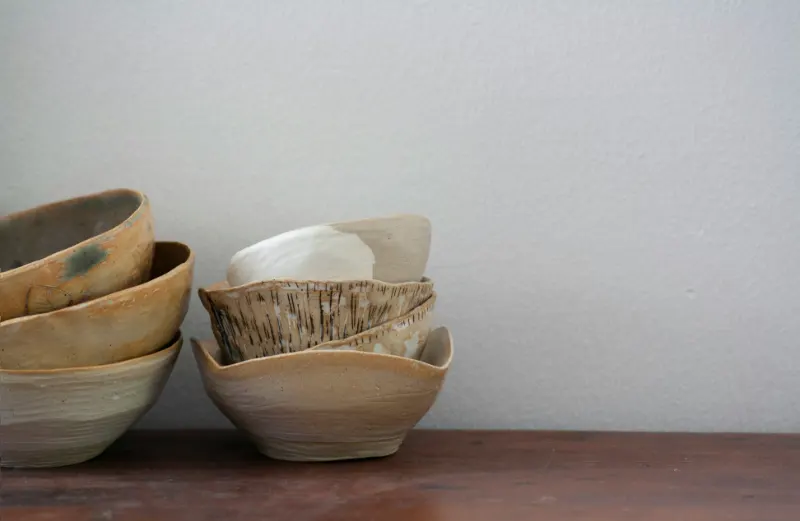
Then there is negative space, which in organic modern design is not an absence but an active element. The empty area around a chair, the unadorned stretch of wall, the gap between sofa and coffee table; all of these are intentional. They let light travel, let shadows appear, and create a kind of interior horizon line. When you resist filling every surface, you give each remaining object more weight, turning a simple ceramic bowl into a focal point simply by allowing it to stand alone.
Bringing Organic Modern Calm into Your Own Rooms
Translating this style into your home does not require a full renovation, only a sequence of decisions that lean consistently in the same direction. The most transformative step is often subtraction. Clear one entire surface in a room you use every day, leaving only one or two objects that are both useful and quietly beautiful. A lamp with a linen shade, a stack of well-thumbed books, a shallow bowl in stone or wood. Live with that edit for a week and watch how the room’s volume seems to turn down.Next, pay attention to the first thing your body encounters when you enter: usually the floor and whatever you sit or lie on. Swapping a thin, busy-patterned rug for a thicker, neutral one in wool or jute can make the act of crossing the threshold feel noticeably different. A sofa draped in a textured, neutral throw and a couple of large, down-filled cushions in cotton or linen suddenly invites lingering rather than perching.
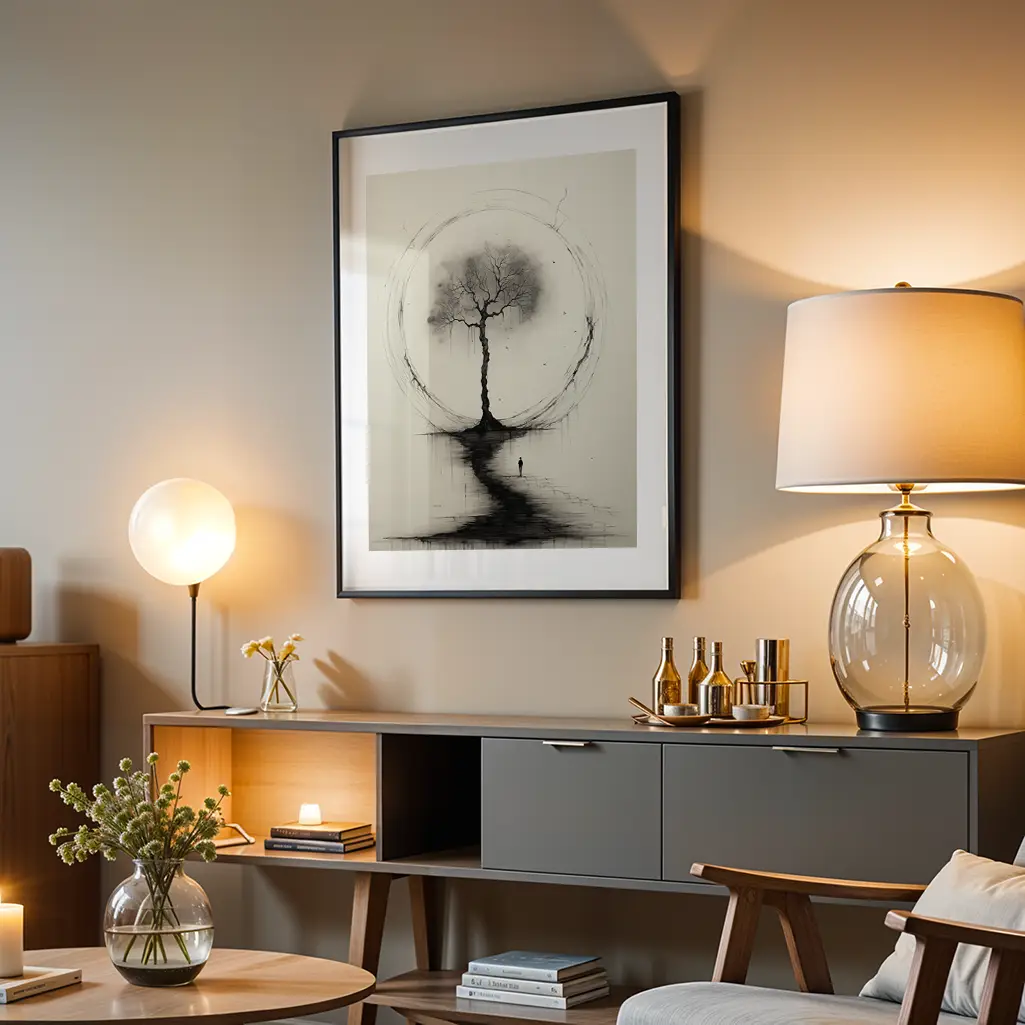
Lighting is where organic modern spaces quietly declare their intentions. Overhead light is softened or dimmed, while light at human scale is layered. Think of a reading corner shaped not just by a chair but by a warm pool of light from a low lamp. Where possible, let natural light be the leading actor. Sheer curtains that filter sun rather than blocking it, reflective but matte surfaces that bounce daylight without glare, and an arrangement of seating that acknowledges where the best light falls in the morning or late afternoon all contribute to that understated sense of luxury.
Finally, consider how nature can enter without performance. A single branch in an oversized vase, chosen for its line rather than its flowers, can do more for an organic modern room than a tightly packed bouquet. A stone you picked up on a walk, placed on a stack of books, can be a more meaningful object than a random decorative purchase. The aim is not to display nature but to be in quiet relationship with it.
A calm-lux home is less about following a trend called organic modern and more about agreeing to a certain pace of living. It asks what is essential for comfort, for beauty, for clarity of mind, and lets the rest fall away. The result is a space that does not shout for attention on social media, but one that you might look forward to returning to with an almost physical sense of relief. In that way, the style is less a look than a practice: a daily choice to keep your rooms, and by subtle extension your life, a little more spacious, a little more human, and quietly, persistently, at ease.