Hygge as an Emotional Blueprint, Not a Decor Style
"Hygge" has become shorthand for candles, wool throws, and steaming mugs. But in its Danish origin, it is less a style decision than an emotional blueprint: a way of shaping space so the nervous system can exhale. To understand why it works, it helps to look past the fur throws on Instagram and into what your brain is doing in a genuinely hyggelig room.Psychologists often talk about "perceived safety" as the foundation of calm. Your body continuously scans for threat, even when you think you are just scrolling your phone. Hygge works because it stacks dozens of small environmental signals that whisper the same message: you are safe, you are seen, and you can let your guard down.
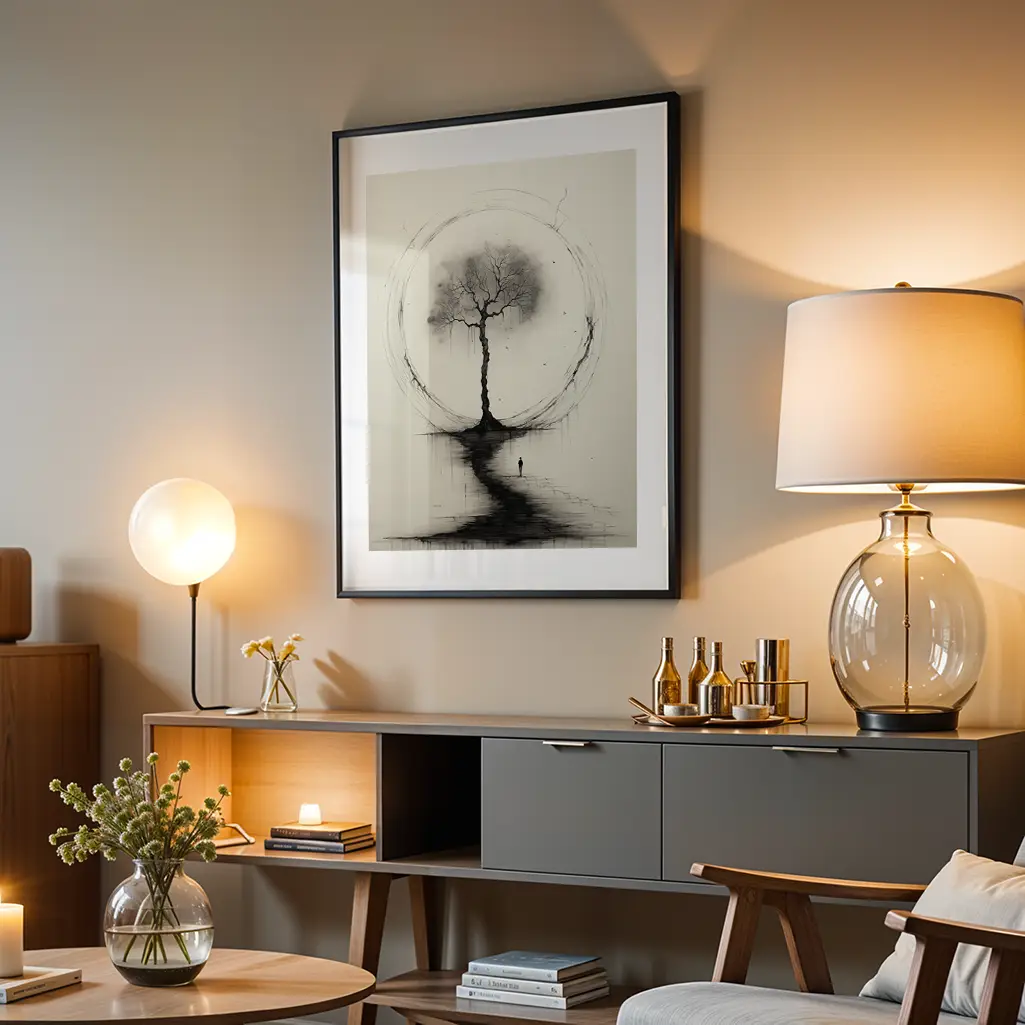
Light is the first signal. Harsh overhead fixtures scatter light evenly and impersonally, which is efficient for offices but exhausting for evenings at home. The low, localized glow of lamps and candles concentrates light into small pools. Your eyes work less. Shadows softening in the corners reduce visual complexity. At a neurological level, this translates to lower arousal and gentler alertness.
Texture is another quiet agent of comfort. Smooth, glossy surfaces bounce light and reflections, keeping your attention in motion. Hygge favors matte, nubby, and soft materials that absorb light and slow the eye. When you drape a wool blanket over a leather sofa or place a ceramic mug on a wooden tray, you are not just making a vignette; you are layering cues that it is safe to rest. The tactility invites touch, and touch is one of the fastest pathways to downshifting the stress response.
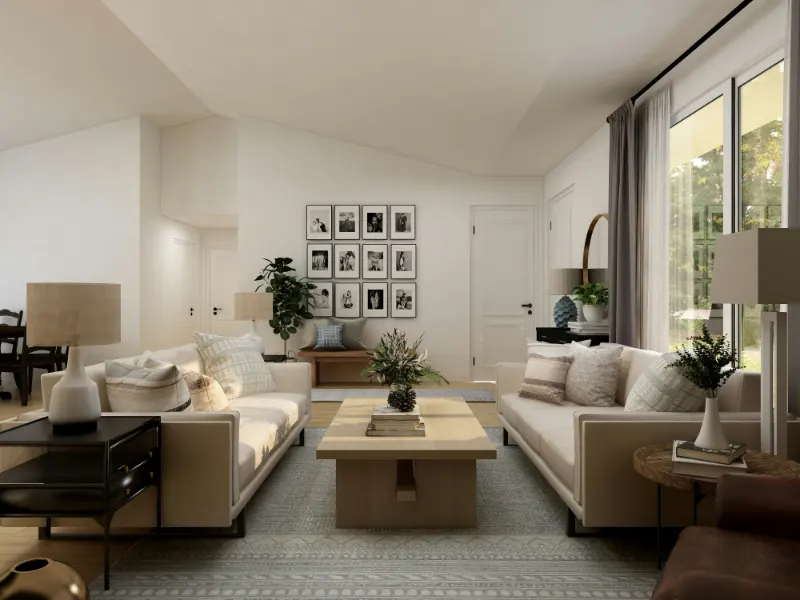
There is also the question of scale. Spacious, glass-walled interiors can feel aspirational and yet subtly lonely. Hygge gravitates toward human-scale spaces: a reading chair pulled slightly into a corner, a dining table that feels full even with two people at one end, a window seat framed by curtains. When the proportions of a room loosely match the body, there is a primitive recognition that this is a place designed for people, not for spectacle.
The psychology here is simple but powerful: the more your environment supports low-stakes control, the calmer you feel. A basket of throws within reach, a dimmer switch near the bed, a tray that gathers remote controls and books into one tidy island are all micro-reminders that you can adjust the world around you. Even if life outside feels unruly, the space you come home to answers back with responsiveness. That contrast is often what people are really craving when they say they want hygge.
For your own home, this means that copying a photograph of a Nordic living room is less important than listening for your own signals of ease. Which seat do you always choose without thinking. Where does your body naturally soften. Hygge, at its best, is not an imported aesthetic but an edited response to the precise corners where you most want to feel held.
How Hygge Calms the Nervous System
If hygge has a superpower, it is how efficiently it lowers the background hum of anxiety. This is not magic; it is the brain doing what it evolved to do when it encounters warmth, softness, and unhurried time.Start with warmth. Psychological studies repeatedly find that physical warmth and emotional warmth are intertwined. Holding a warm drink can make people rate others as more generous and kind. In a hyggelig space, warmth is layered: a slightly higher room temperature in the evening, a blanket nearby, socks that are not an afterthought but part of the ritual of staying in. Your body stops burning energy on keeping itself warm and can redirect that quiet surplus toward restoration.
Then there is predictability. The brain loves patterns because they make the world easier to navigate. Hygge leans into small, repeated rituals: the lamp you always switch on at dusk, the same mug you reach for on Sunday mornings, the stack of books that lives by the bed instead of traveling around the house. These are not merely habits; they are anchors. Each time you repeat them, you teach your nervous system what comes next, and uncertainty recedes.
Hygge also softens the social edges of home. In many households, shared spaces become silent to-do lists: mail to sort, toys to pick up, dishes waiting in the sink. Under that visual noise, it is hard to fully rest with other people. A hygge-minded room lowers the volume on tasks and raises the volume on presence. You might clear the dining table completely and keep a candle and a bowl of fruit in the center so the default state is invitation, not backlog. You might place two chairs at a slight angle rather than directly facing each other, which psychologically feels less confrontational and more like a shared lookout.
There is also an important acceptance built into hygge that counters perfectionism, one of the great saboteurs of relaxation. A truly hyggelig home is tidy enough to move through but not so polished that you fear disturbing it. A stack of well-read magazines, a visible knitting project, a board game mid-play can act as evidence that life here is lived, not staged. The mind takes a cue and relaxes its own demand for flawless performance.
You might notice that none of this requires buying anything specific. You are not obligated to own a sheepskin rug or a particular Scandinavian chair. The work is largely subtractive: dimming rather than adding lights, editing surfaces rather than furnishing new ones, choosing a few items that will earn the status of ritual objects and letting the rest recede.
If you want to apply this in a single room, approach it as a sensory experiment. Sit where you usually sit in the evening and ask very literal questions. What does my eye land on first, and does it soothe or demand. What texture meets my hand when I reach to the side. Is there a small change that would make this spot feel 10 percent kinder to come home to. That incremental shift is the essence of hygge: not a total makeover, but a steady turning of the emotional thermostat of your space toward warmth, familiarity, and gentle refuge.