The ancient comfort of things that age
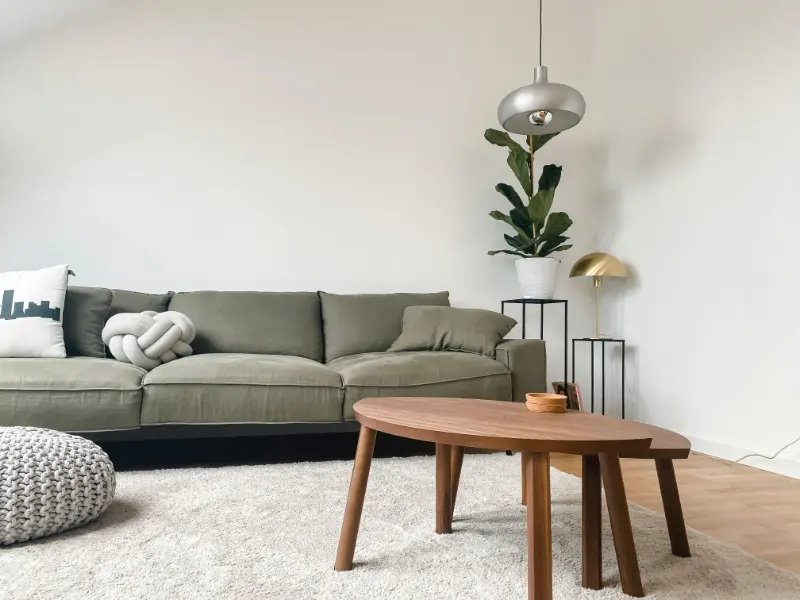
Walk into a room wrapped in quiet wood and something in the body, long before the mind, exhales. The air feels slower. Surfaces feel familiar. A linen curtain moves in the draft, a wool rug softens the floor, a clay pot holds a plant that has outgrown its first home. None of this is accidental. Natural materials have a particular psychological gravity: they make a room feel more like shelter than stage set, and they do it in ways researchers are only beginning to map in detail.
In evolutionary terms, the human nervous system was tuned for millions of years in environments made almost entirely of natural matter. Texture, imperfection and variation were the visual grammar of safety. Bark that peeled a certain way, stone that had weathered, soil that cracked in recognizable patterns signaled a place one had seen before, a place that had not killed you last time. When you stand in front of a solid wood table today, some of that old pattern recognition lights up. The eyes register grain and knots, tiny irregularities in color and direction. The brain reads those irregularities as evidence of age and authenticity rather than threat, and the nervous system, recognizing the visual language of the outdoors, dials down its vigilance.
This is part of why plastic mimics of wood feel different from wood itself, even when color and pattern are convincing. The laminate surface repeats a printed grain with machine precision. You can feel, often subconsciously, that the pattern has no history. There is no story of rain and growth embedded in it, only an algorithm. Natural materials, by contrast, are records of slow processes: layers of sediment compressed into limestone, years of sunlight traced in oak rings, the long work of an animal made visible in wool fibers. That temporal depth matters. It reassures us that the thing in front of us has endured more than one season and can probably endure a few more.
Rooms rich in these materials also signal a kind of tactile honesty. A stone windowsill that chips will show stone all the way through. A clay vessel that cracks reveals more clay. This continuity from surface to core is quietly important. The mind relaxes when it does not have to second-guess what it touches. There is no surprise layer, no hollow echo. In this way, natural matter becomes a visual promise: what you see is what you get, and what you get has been here for a long time.
Bringing this into a home does not require turning the living room into a cabin. It can be as simple as choosing a single piece of furniture in solid, not veneered, wood; a wool throw instead of acrylic; a stone or earthenware lamp base in place of glossy plastic. The goal is to create a background hum of authenticity, so that even if much of life happens on screens and synthetic surfaces, the room itself is anchored in materials that could exist even if electricity did not.
How natural textures train the nervous system to trust
Safety is rarely about one big gesture; it is built from dozens of micro-signals the body receives as it moves through space. Natural materials excel at sending these small reassurances. On a sensory level, they have what psychologists sometimes describe as "soft fascination". A wood floor, for example, offers subtle shifts in tone and grain that hold just enough interest to keep the eyes engaged without flooding them. The mind is allowed to wander but not spin. This is the same quality that makes a walk in a forest more restorative than a walk through a neon mall: the environment is patterned but not insistent.
Touch deepens this sense of security. Skin is an excellent lie detector. It can tell, in a fraction of a second, the difference between the silky irregularity of linen and the static drag of synthetic fibers. Materials of plant or animal origin tend to respond to temperature, humidity and pressure in ways that feel proportionate. A wool rug cushions the step and springs back with a gentle resistance that mirrors the body. A leather chair warms beneath a person and records, in creases and softening, the fact that someone has been sitting there for years. This responsiveness supports a feedback loop between body and environment. When the body receives consistent, predictable tactile responses, it learns that the space is knowable and, therefore, safe.
There is also the matter of sound. Rooms lined with hard, artificial surfaces tend to echo. Every footstep rings, every dropped object is louder than it needs to be. The body tenses in anticipation of sharp spikes of noise. Wood, textiles and porous stone absorb and soften sound, creating what could be called "acoustic gentleness". You might not notice that your kitchen cabinets are solid oak rather than laminate, but you will notice that their doors close with a low, soft thud instead of a bright slap. Over hours and days, these small differences accumulate, and the nervous system learns that the room will not startle it without warning.
For someone designing a home, the practical question becomes how to layer these cues of trust. Start close to the body. The surfaces you touch most often should be the ones most invested in naturality: the handle of a favorite mug, the edge of a dining table, the fabric of the sofa where you read. From there, move outward to the things that structure the room visually: floor coverings, curtains, larger furniture. Even in a modern apartment with concrete ceilings and metal-framed windows, pockets of natural texture can create islands of calm. A jute or wool rug under a coffee table, a cluster of clay or stone vessels on a shelf, a wooden stool that migrates between rooms as needed, all signal to the senses that not everything here is synthetic and changeable.
Patina, imperfection and the feeling of home
If newness is the reigning currency of many interiors, safety has a different relationship to time. The materials that age visibly invite a more forgiving way of living with objects. Wood dents and darkens where people gather; marble etches under citrus and wine; brass develops a dull sheen where it is most often touched. These marks function as a kind of informal archive. They say people have lived here, and nothing terrible happened when the table was scratched. That narrative is comforting, especially in a culture anxious about preserving pristine appearances.
Psychologically, this is related to what researchers studying home environments call "place attachment". People feel secure in spaces that reflect their personal history and tolerate their daily mess. Natural materials are unusually good at recording that history gracefully. A synthetic countertop stained by coffee looks damaged. A butcher block with the same mark looks seasoned. One broadcasts failure; the other implies continuity. Objects that can absorb and dignify wear encourage more relaxed behavior. When you do not have to tiptoe around your belongings, you move more naturally, and the body reads that ease as evidence that it is, in fact, at home.
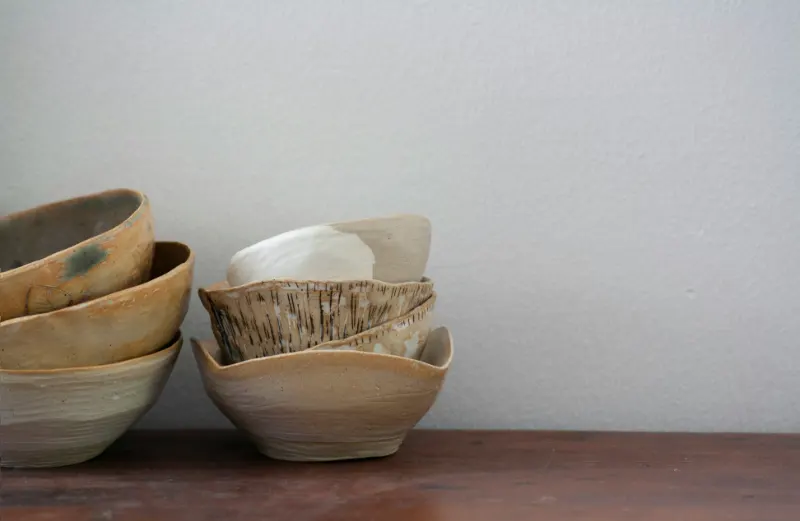
Imperfection plays a similar role at the level of individual pieces. A hand-thrown ceramic with a slightly off-center lip or a board with an asymmetrical knot interrupts the fantasy of perfection polished into many contemporary interiors. Instead, these things stand as small reminders that irregularity is normal, and that normal is acceptable. To a nervous system constantly confronted with filtered images and flawless surfaces, such reminders can be unexpectedly therapeutic. They reintroduce tolerance for nuance and variation, in objects and, by extension, in people.
Translating this into design choices means allowing room for patina and resisting the urge to correct every quirk. Choose a dining table in a wood species that will age visibly rather than one sealed beneath a plastic-like finish that cannot be touched without anxiety. Let a bronze handle tarnish a little. Live with a stone top that will change under daily use. These are not failures of maintenance but contributions to the room's emotional vocabulary. They teach everyone who enters that perfection is not the standard here; continuity and care are.
Ultimately, the psychology of natural materials comes down to a simple, almost childlike recognition: we trust what feels real, responsive and willing to change with us. A home that leans into wood, stone, wool, clay and linen is a home that admits time, touch and small accidents. In such spaces, safety is not an abstract idea but a daily sensation, embedded in every surface the hand can rest on.