Why Style Matters More When You Have Less Space
“Small” is not a style; it is a constraint that sharpens every design decision. In a tight apartment, your sofa line, lamp height, and even the thickness of a table leg become part of an equation: how much light, visual calm, and flexibility you can get from a single room.
What people usually call “style” in small spaces is really a set of design strategies disguised as looks. Under the surface, the same principles repeat: control visual noise, respect negative space, and make every object earn its footprint. The seven looks below are less about rules and more about mindsets; each can be tuned to the realities of your floor plan, budget, and existing pieces.
Before you think about which look fits you, pay attention to what you cannot change. Ceiling height, window placement, and natural light will nudge you toward certain directions. Rooms with good light can handle more contrast and color; darker apartments benefit from softer transitions and fewer hard breaks between zones. Instead of treating your apartment like a problem, treat it like a brief an interior designer would relish: clear limits, high expectations, and room for invention.
When you evaluate each style, ask three questions. How does this look manage clutter? How does it handle light and shadow? And how easy would it be to maintain on a Thursday night when you are tired and the mail has exploded on the table? The best style is not the most photogenic one; it is the one that supports your actual life without needing constant stage management.
Seven Looks That Work Hard in Small Spaces
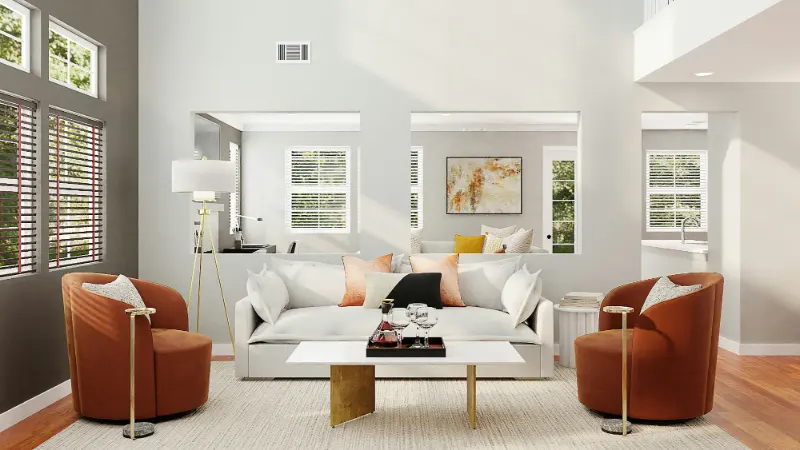
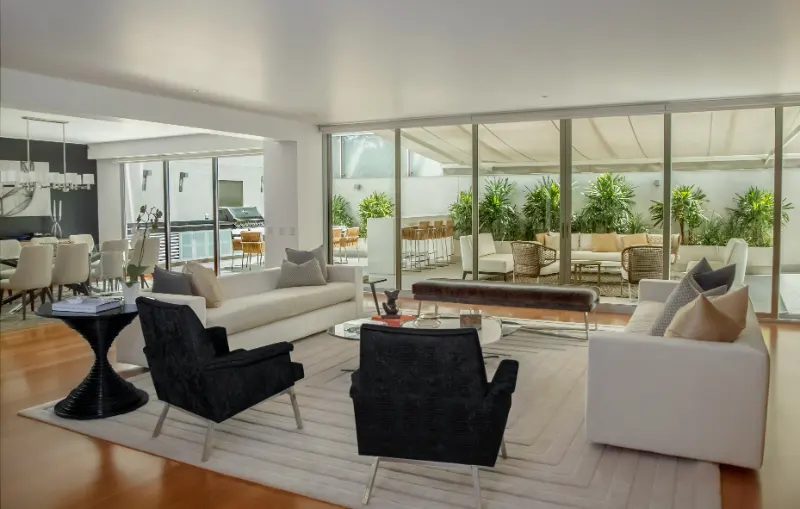
The first look is the “soft minimalist” apartment. Instead of stark white boxes and a single chair, think of warm creams, sand tones, and rounded edges. This style relies on negative space, but it stays human through texture: linen, boucle, wool, pale woods. Choose a slim sofa on legs instead of a bulky sectional, a coffee table with curved corners, and a limited palette of two or three neutrals. Visual quiet is the goal, not aesthetic austerity. What makes this work in small rooms is that your eye slides easily across the surfaces instead of stopping at high-contrast lines, so the walls feel farther away than they are.
A second, more playful approach is “micro-Scandi.” This is the familiar Scandinavian look, edited for city apartments. Light oak, white walls, and black or charcoal accents create that airy, graphic balance. To keep it from feeling chilly, lean on warm wood tones and one recurring accent color in textiles or art. The reasoning here is that strong, simple shapes read clearly even in tight quarters. A trio of honest materials wood, metal, wool will feel coherent from the doorway, making the apartment feel like a single intentional space rather than a series of compromises.
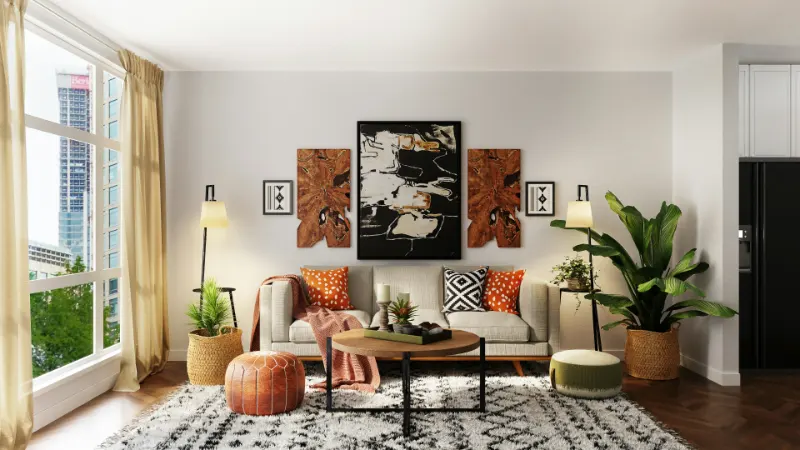
If you crave color, a “gentle color-blocked” look can still flatter a small footprint. Instead of scattering bright hues, assign colors to zones. The sofa corner might live in sage and oatmeal, the dining niche in terracotta and white. Use large shapes: a painted section of wall, a rug that defines the living area, a bold pendant over a tiny table. Design-wise, this consolidates visual information so your eye reads “areas” rather than random objects. The room can be lively without feeling chaotic, because each color is doing a job in a clearly defined field.
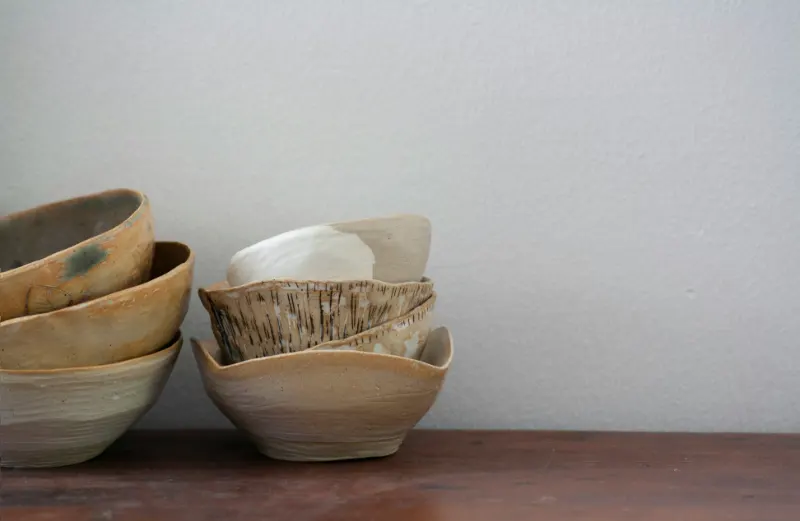
There is also the “refined monochrome” apartment. This look keeps the entire space in one color family, but with many textures. Think of a charcoal studio with velvet cushions, matte walls, a wool rug, and a linen headboard; or a pale greige box softly layered with sisal, ceramics, and lightly stained wood. Small spaces love this approach because it erases visual boundaries. When the walls, curtains, and sofa are all close in tone, their edges blur; the volume of the room becomes more important than the outline of each piece. To avoid flatness, make sure at least three different textures are in play and let light bounce off some surfaces while others absorb it.
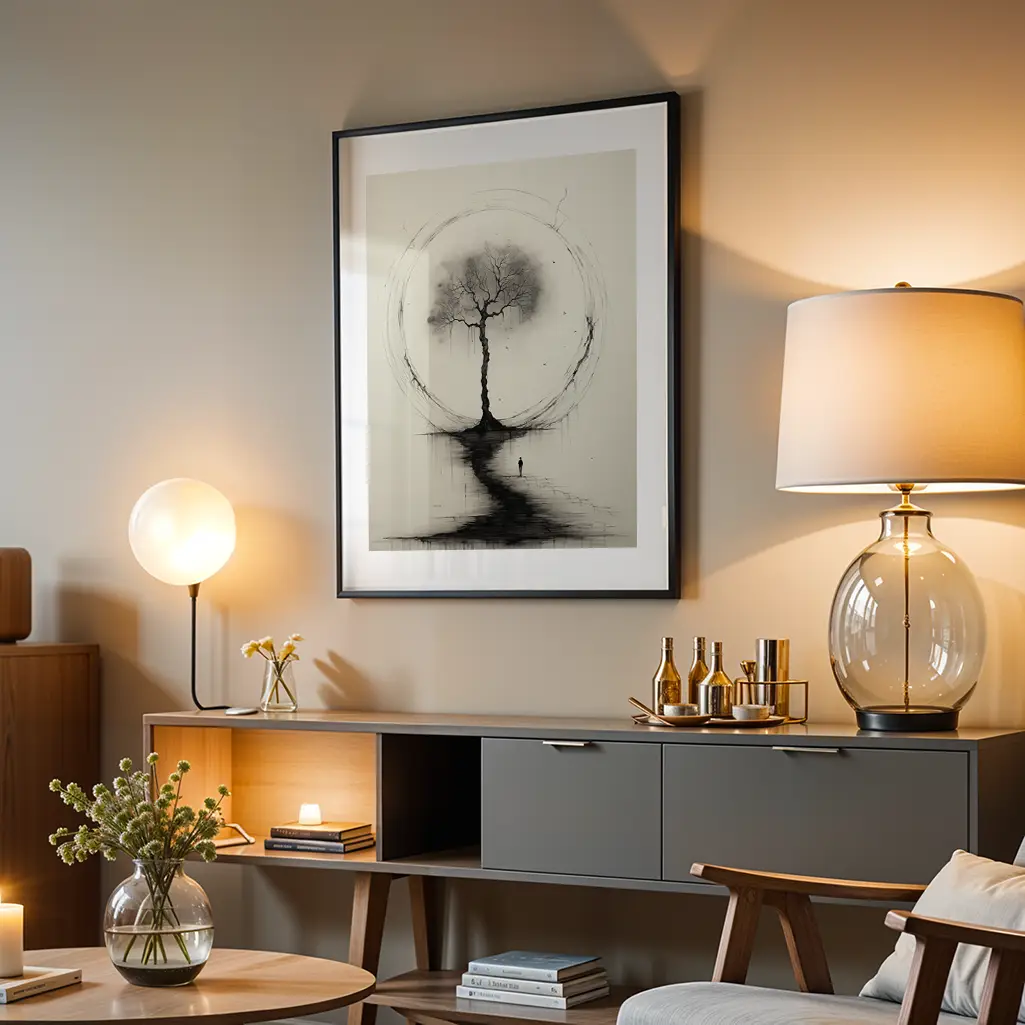
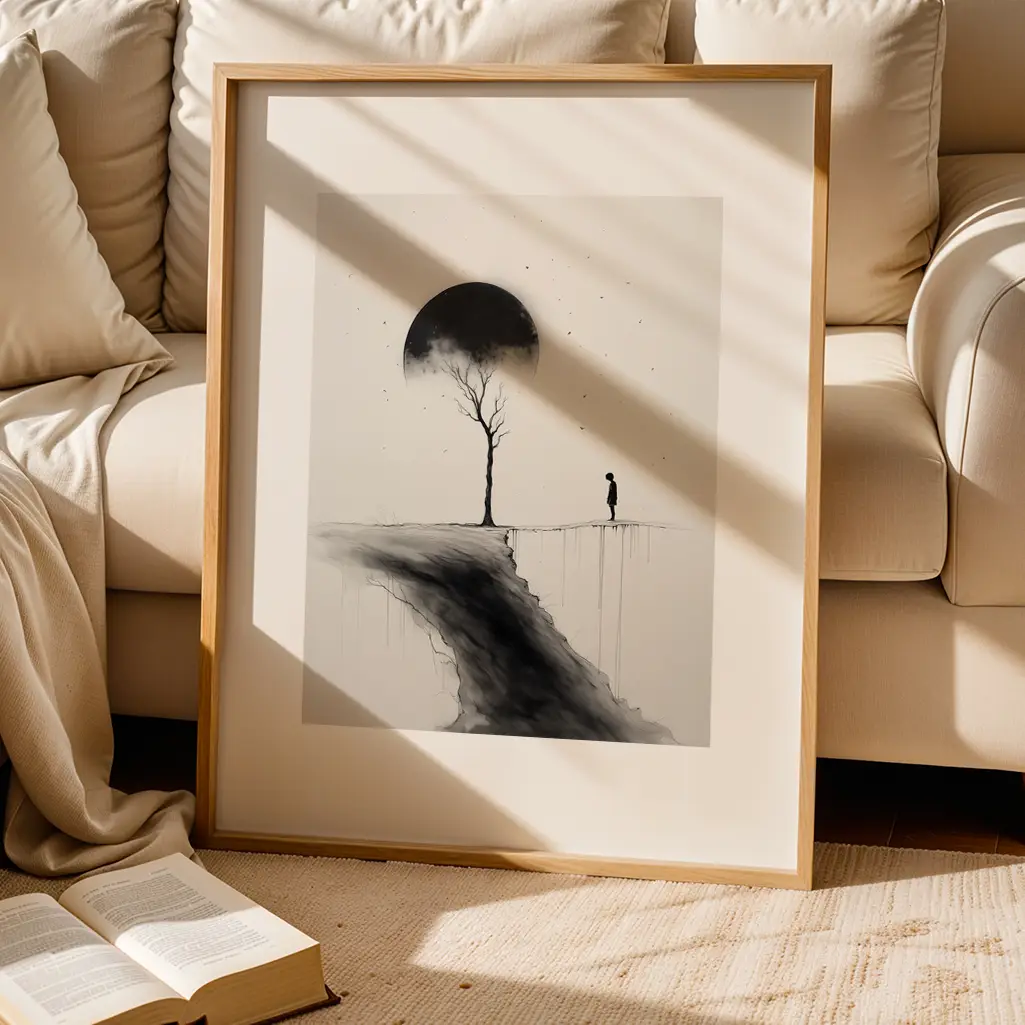
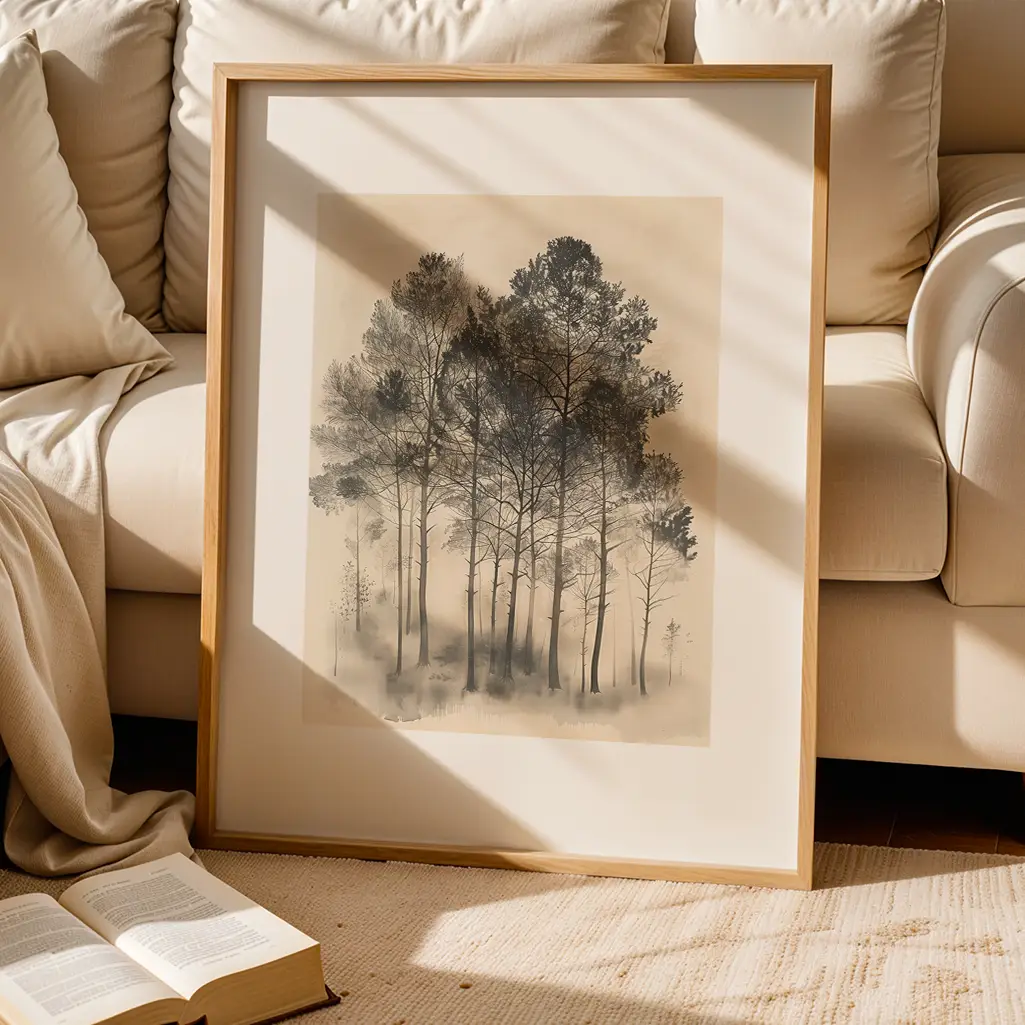
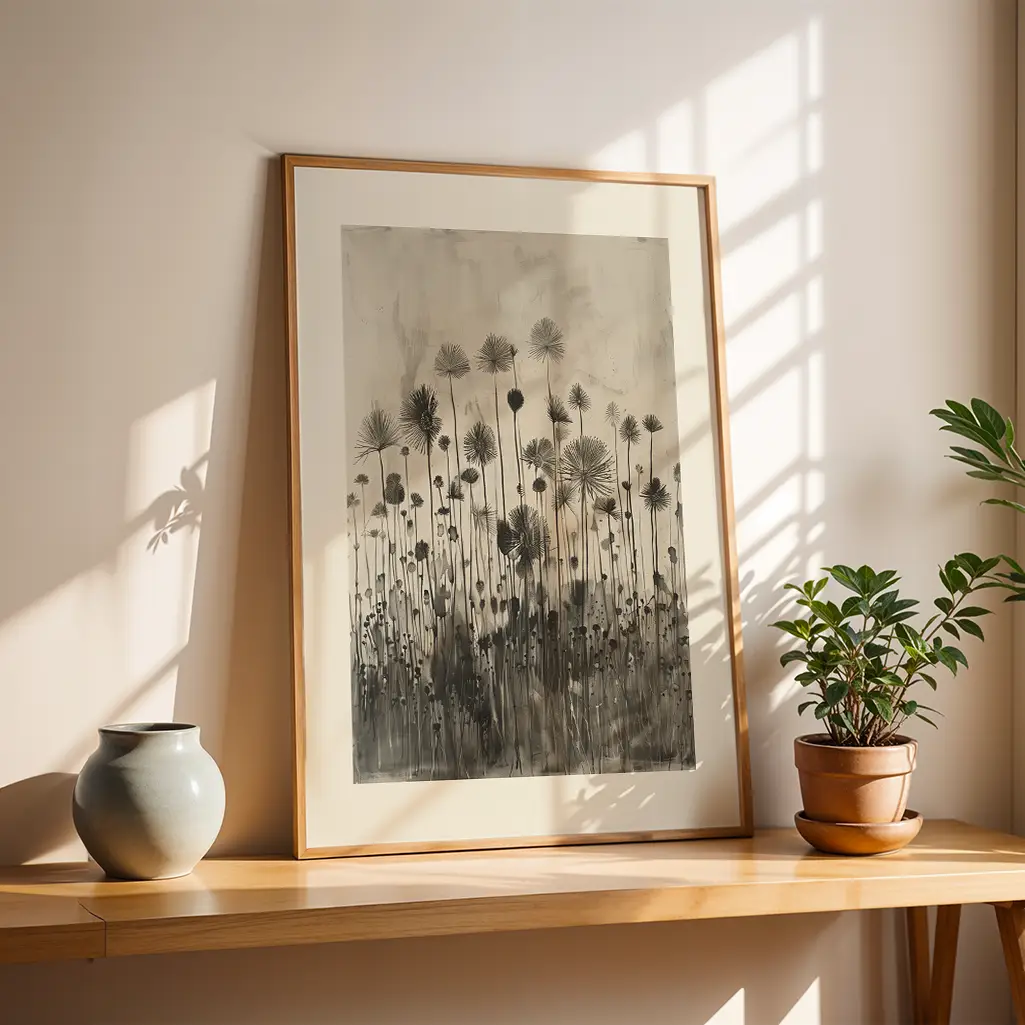
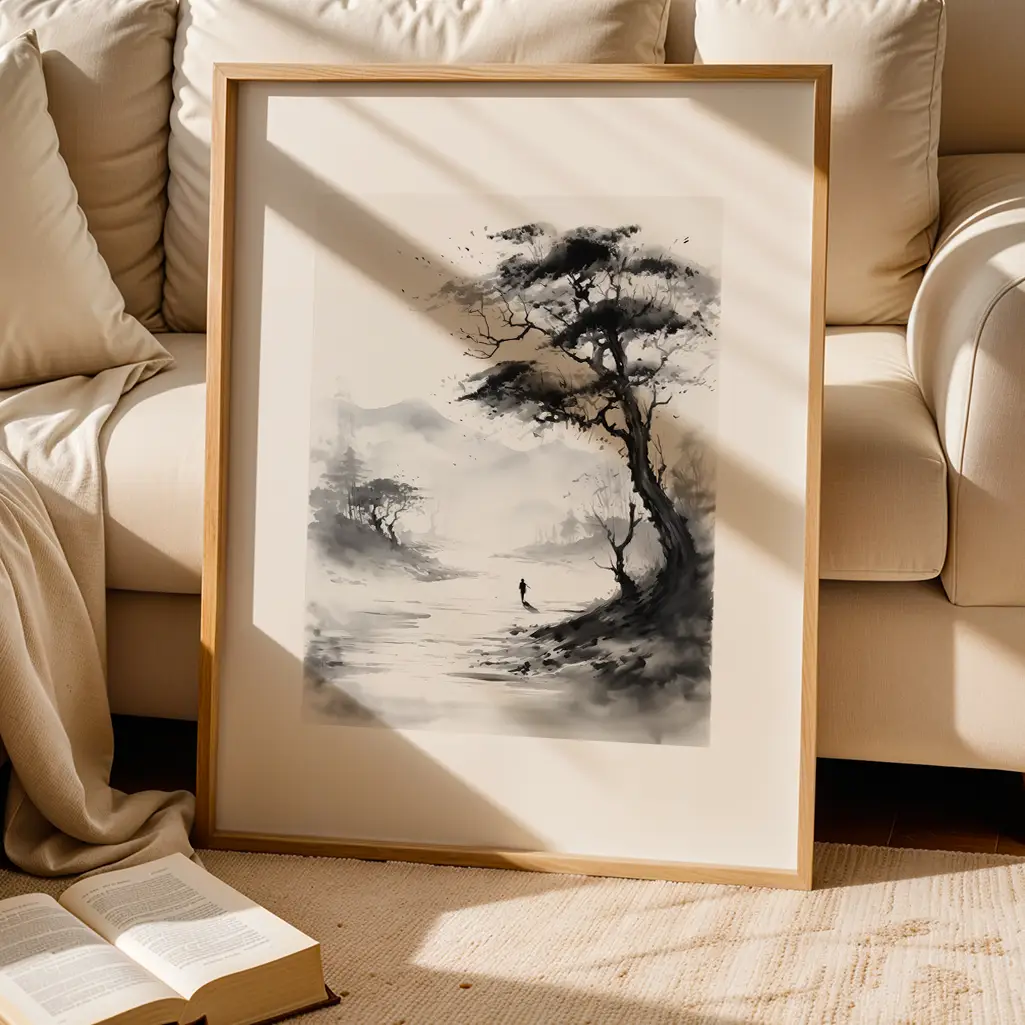
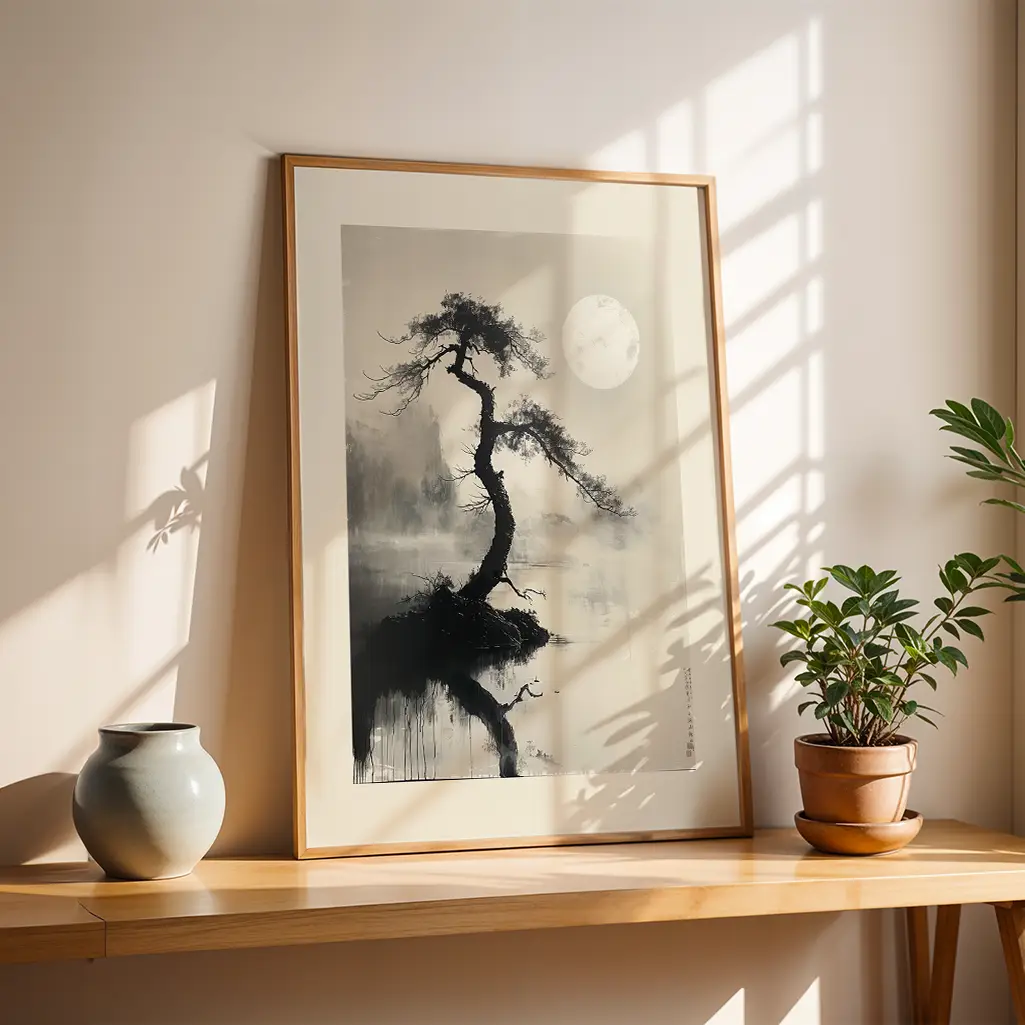
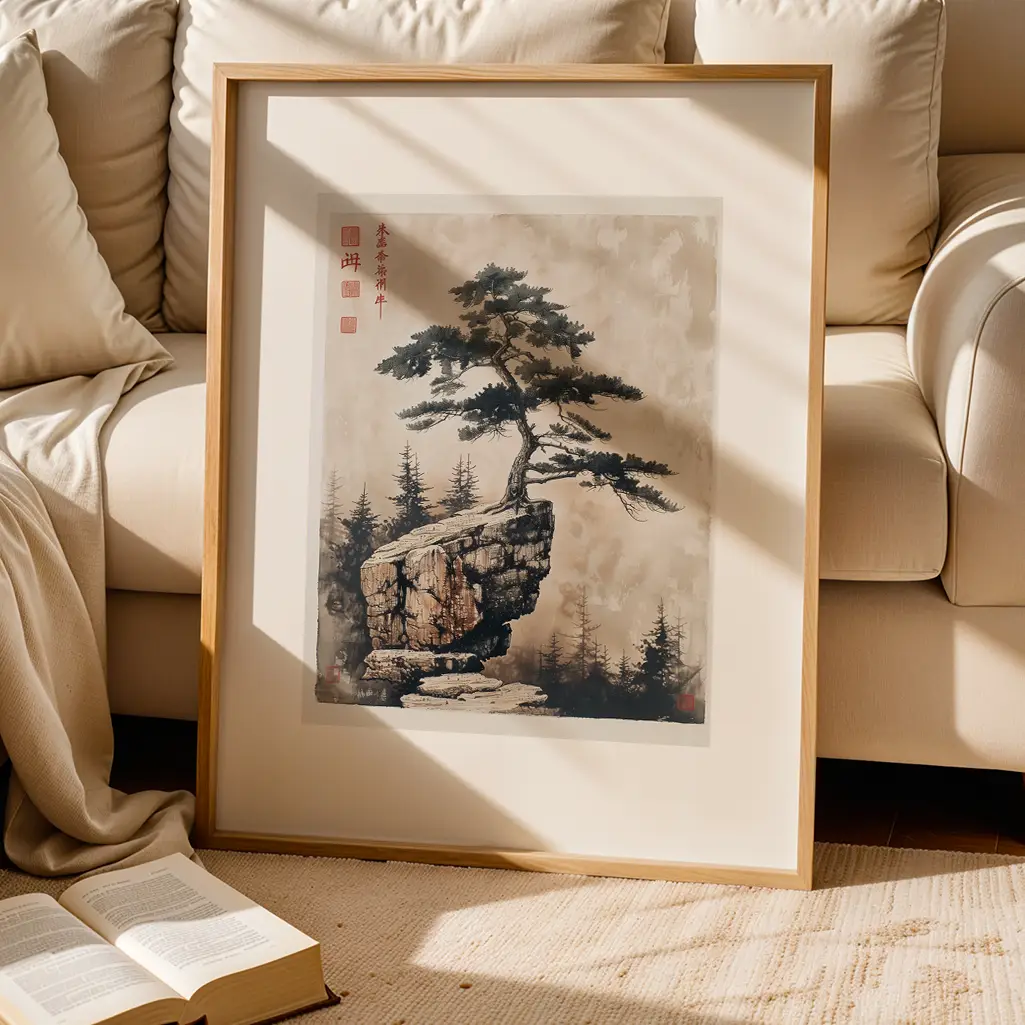
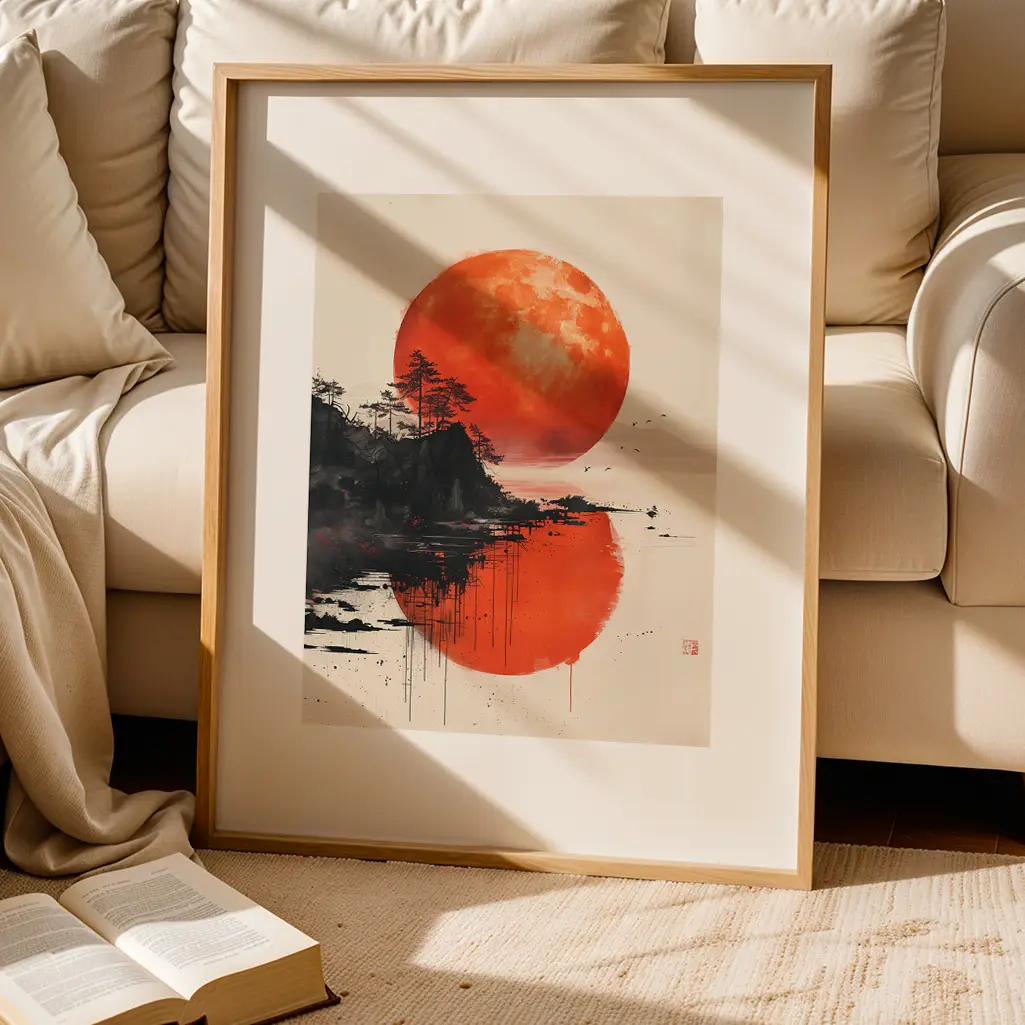
For collectors, a “gallery calm” look offers a compromise between minimalism and maximalism. The idea is to keep furniture lines extremely simple and treat art, books, and objects as the main event. Low, linear storage along one wall anchors the space; above it, a quiet but considered arrangement of framed pieces pulls the eye upward. The key move here is strict editing. You display fewer objects at once, but give each one more breathing room. This satisfies the desire for personality without tipping into visual crowding. When every surface has a story, choose stories that can stand up to close scrutiny in a small room.
If you like history and warmth, a “compact Parisian” look can work surprisingly well. Picture slim-legged vintage chairs, a small bistro table, and one ornate mirror or light fixture to add drama. The rational logic behind the romance is that European apartments have been negotiating charm and constraint for centuries. High-legged pieces reveal more floor, vintage furniture is often scaled smaller, and one glamorous gesture can replace a dozen smaller decorations. Keep the palette simple and the silhouettes varied; the contrast between curved and straight does the visual work that color might do in a larger home.
For those who prefer coziness, a “tailored cocoon” style uses deeper colors and layered textiles, but keeps shapes clean. A chocolate or ink blue wall, a tight-back sofa, a wool rug, and a few oversized cushions will draw you in. The risk in small apartments is heaviness; the cure is clarity. Limit the number of furniture pieces, allow pathways to remain open, and introduce one or two reflective elements a mirror, a glass lamp to keep the space from feeling sealed. The psychological payoff is real: a small room that leans into its own intimacy often feels more luxurious than a larger but underfurnished one.
Choosing a Look and Making It Liveable
Once you recognize these seven looks as strategies, not costumes, you can begin to blend them. A soft minimalist base can easily borrow a Parisian mirror or a gallery wall. The important thing is to choose one primary logic and let everything else orbit it. If your main idea is monochrome calm, resist the temptation of a wildly patterned rug; if your base is color-blocked, keep the furniture silhouettes unfussy so the colors can lead.
In practice, designing a small apartment is less about buying the right items and more about editing the wrong ones. Measure ruthlessly, then measure again. Question any piece that does only one job and takes up more floor area than it returns in comfort or joy. Pay attention to how your body moves through the space; if you are constantly angling around a coffee table, the table is wrong, not you. Styling should be a form of hospitality toward your future self, who comes home with groceries and a backpack and deserves an easy landing.
Most important, allow the space to evolve. Live with less for a few weeks before adding more. Notice where piles form and where light feels best in the morning. The right style for a small apartment is the one that makes these daily rhythms feel supported and a little bit elevated, as if your home understands you and has already quietly made room.