
Where Tradition Begins: Shape, Story and Symmetry
Traditional style is less about owning antiques and more about embracing a certain kind of order. It grew from European and early American interiors, where rooms were designed around symmetry, proportion and a sense of calm continuity. When you walk into a traditional space, you feel the quiet authority of things that look as if they have always been there and will continue to be there tomorrow.At the core of traditional style are recognizable silhouettes. A rolled arm sofa, a camelback loveseat, a wing chair with generous curves: these pieces echo the human body, cradling rather than boxing it in. The furniture has profiles that undulate instead of stopping abruptly. Edges are softened, details are often carved or turned, and nothing feels impatient. Even the legs of a table want to tell a story, tapering with intention or ending in a small flourish of a foot.
Color in traditional rooms tends to be stable rather than startling. Creams, ivories, camels and soft greens often sit beside burgundies, navies and tobacco browns. These tones do not shout; they resonate slowly, like a string section warming up in a familiar piece of music. Patterns layer in quietly: a floral chintz, a classic stripe, a subtle damask that you notice only when the light hits the wall from the side. They help create a sense of depth, but they rarely fight for attention.
There is also a narrative dimension. Traditional interiors often reference history, but in domestic terms. A sideboard might nod to a Georgian piece, a rug might carry a Persian or Turkish motif, a mirror might borrow from a French gilt frame. The point is not to re-create a museum but to suggest continuity, to say that this room is part of a longer story of people living with objects, adjusting and passing them on. You sense that if you removed one painting and replaced it with another, the room would not collapse; its grammar is stable enough to absorb edits.
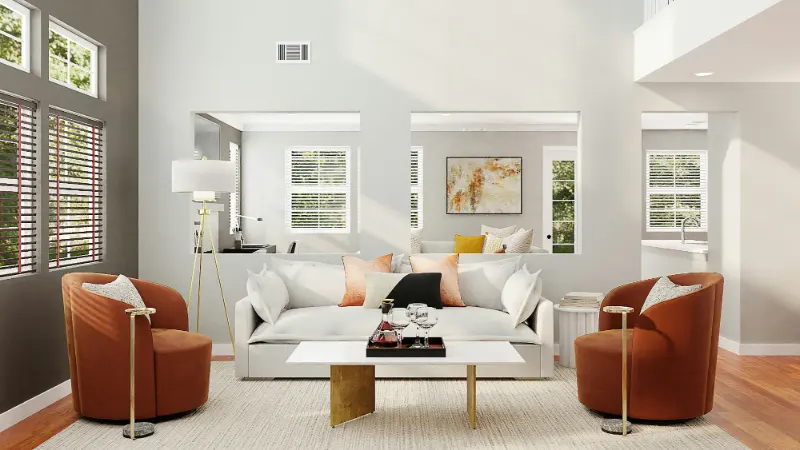
Most of all, traditional style is structured by symmetry. Two lamps flank a sofa, a pair of chairs balances a fireplace, matching nightstands anchor a bed. The room often forms an invisible axis, a calm spine that everything else arranges itself around. This is what gives traditional spaces their quietly composed feeling. You can sense the plan before you notice the cushions. In this order there is a kind of emotional promise: the world out there may be unpredictable, but here, the chairs will always meet each other’s gaze across the rug.
Yet that very sense of completeness can sometimes feel immovable. For many people, contemporary life does not quite fit into such polished balance. The laptop lives on the dining table, the dog owns the sofa, and the eye has grown used to cleaner lines. Enter transitional style, which keeps the bones of tradition while acknowledging that the house is no longer a set piece but a lived-in stage.
How Transitional Shifts the Lens Without Breaking the Frame
Transitional style begins by asking a simple question: if the values of traditional design are proportion, comfort and continuity, which parts must stay, and which can we gently alter to better fit the way we actually live now. The answer is that much more can change than you might fear, provided you protect the underlying structure and mood.In a transitional room, silhouettes begin to simplify. The rolled arm of a sofa becomes straighter, the tufting on a chair grows lighter or disappears, the carved leg loses some of its ornament. Lines do not have to be severe; they simply become clearer. Imagine taking a traditional space and gently erasing a few curlicues with an invisible pencil until the forms feel more edited. The result is a quieter visual field where your eye can rest more easily, but where the overall sense of familiarity remains.
Color softens too, but in a different way. While traditional rooms may lean into rich, saturated hues, transitional spaces often prefer a more tonal palette. Layers of beige, greige, soft white and muted charcoal form a background that makes a single piece of wood furniture or a framed landscape feel important instead of crowded. This does not mean you must live in a sea of oatmeal. It means that when you use stronger colors, you do so with a bit more intention, knowing that each accent will read more clearly against a simpler backdrop.
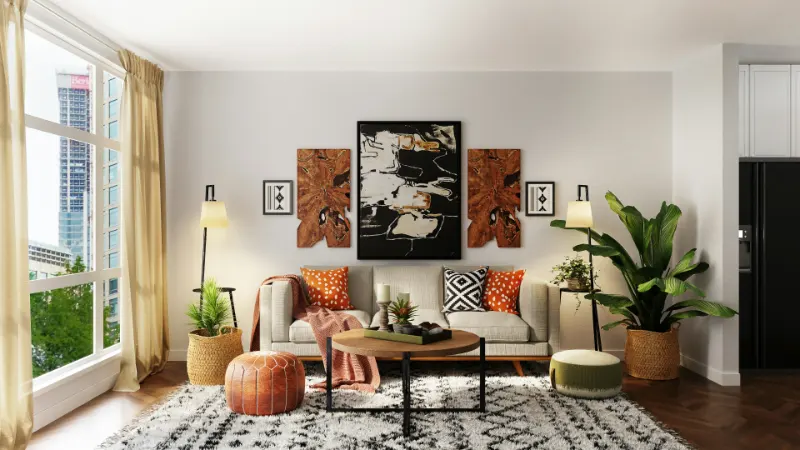
The greatest shift, though, is in how tradition and modernity meet within the same four walls. Transitional style is almost always a conversation between an older gesture and a newer one. A traditional rug might sit under a pared back sofa with straight arms. A classic architectural mantel might frame a more minimal coffee table in metal and stone. The chair may still welcome you with a familiar curve, but the lamp beside it might be a slim cylinder in bronze or black with a crisp shade, rather than an ornate base. In each pairing, one object carries the memory, the other the present tense.
What stays, even in a thoroughly transitional home, is the commitment to proportion and balance. A room still feels intentionally arranged; the sofa still relates to the rug, the artwork still occupies the wall in a considered way. Symmetry might loosen, but it does not vanish. You might choose an asymmetrical composition around a fireplace, for example, yet still echo height or color from one side of the room to the other. The calm spine of the space bends, but it does not break.
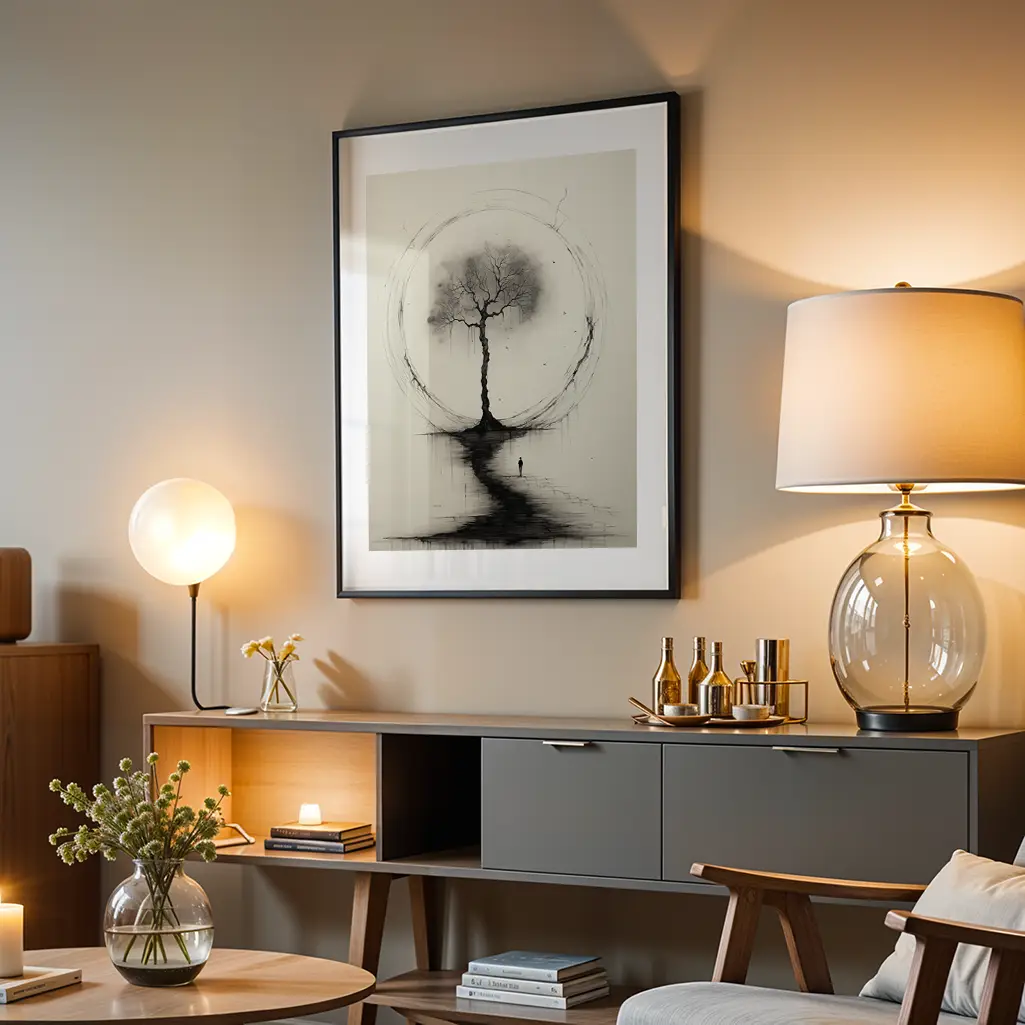
What changes most is the attitude toward space and light. Transitional rooms generally welcome more negative space. Surfaces are edited; the number of accessories is reduced. Instead of many small frames on a console, you might choose one or two larger pieces and leave margins of clear surface around them. This makes the remaining traditional elements feel deliberate, almost elevated, as if each one has been auditioned rather than inherited by default.
If you are trying to design a nicer home space for yourself, it can help to think of transitional style as a respectful but insistent editor of tradition. You start by keeping what truly matters: a sense of welcome, the pleasure of a well proportioned room, the inheritance of a few beloved forms. Then you adjust what no longer serves your life: heavy fabrics that do not breathe, overly formal arrangements that resist daily use, redundant ornament that only collects dust. The result is a home that still feels rooted but is lighter on its feet, capable of holding a laptop on the coffee table and a piece of your grandmother’s china on the shelf without either one feeling out of place.
In the end, whether you lean more traditional or more transitional, the essential work is the same. You are deciding what story you want your rooms to tell and how much of the past you want to invite into that story. The goal is not to impress a visitor with how correct your style is but to recognize yourself in the shapes, colors and arrangements around you. That recognition, more than any label, is what will make your home feel deeply, quietly beautiful.