What Wabi-Sabi Really Means When You Walk Through the Door
Wabi-sabi is often translated as "beauty in imperfection," but that shorthand misses its quiet depth. Rooted in Zen and Japanese tea culture, it is less a style than a way of seeing. In a wabi-sabi space, you feel time. You notice the worn edge of a wooden table, the hairline crack in a favorite mug, the way afternoon light softens a wall. Nothing is pristine, yet nothing feels careless.Historically, wabi suggested a humble, rural simplicity; sabi pointed to the patina of age and the melancholy of passing time. Together, they value what is weathered, modest, and incomplete. The ideal is not the showroom interior where everything matches and nothing ages, but the lived-in room that bears the marks of actual life. Wabi-sabi resists the algorithmic perfection that fills our feeds and asks a slower question: how does your space really feel, in this exact moment?
To approach your home through this lens, you begin by paying close attention. Look around one room as if seeing it for the first time. Where do your eyes rest without effort? Maybe it is a scuffed floor that reveals years of footsteps, or a chair that does not match the others but always seems to be in use. These details, overlooked in a pursuit of perfection, can become anchors of character.
Wabi-sabi is not an excuse for neglect. It is a discipline of care. The chipped bowl is not kept because you cannot be bothered to replace it, but because the chip becomes part of its story. The frayed linen curtain is laundered, mended where needed, and then allowed to hang with its softened hem. You are editing your space not toward more, but toward meaningful less, where each object earns its place by how it supports calm and presence.
From this perspective, trends fall away. A home is not successful because it looks like a photograph; it succeeds when it quietly supports your daily rituals. The cup that fits your hand each morning, the reading corner where the light is right for twenty minutes at dusk, the plant that has leaned toward the same window for years: these become the true design elements. Wabi-sabi asks you to honor these relationships instead of hiding them beneath a layer of perfection.
This is where the Zen aspect matters. Zen practice trains attention to what is, without constant judgment or grasping. In your home, that might mean seeing a water ring on a table as information rather than failure. Perhaps the wood wants oiling and a tray under the glasses next time. Perhaps the mark itself will eventually blend into a soft constellation of use, the way stones in a garden darken in the rain. The point is not to celebrate damage for its own sake, but to accept that time is a collaborator in design.
There is also gentleness in recognizing that you, like your home, are a work in progress. That painting you have not hung because the frame is not quite right, the pile of books migrating from desk to floor, even the empty corner you have never figured out what to do with: all are evidence of an evolving life. Wabi-sabi suggests working with that evolution instead of fighting it. You can place a single chair and a low lamp in that corner and see how it feels for a week, treating the room as an ongoing conversation rather than a finished thesis.
In this way, wabi-sabi is less about adopting a Japanese aesthetic vocabulary and more about changing your relationship to your environment. A home becomes a living partner, developing lines, scars, and soft spots alongside you. Imperfection stops being a problem to fix and becomes the very texture that makes the space yours.
Designing for Calm: Materials, Space, and the Patina of Time
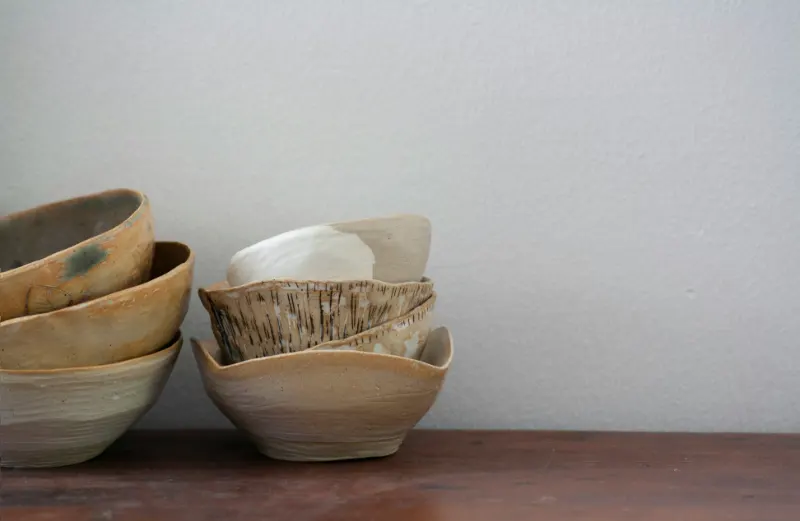
Translating wabi-sabi into everyday design begins with materials. Natural substances age visibly and honestly. Wood darkens and shows scratches; stone dulls where hands frequently touch; linen creases and softens with each wash. These changes record use the way a diary records days. In a Zen-leaning interior, this patina is not hidden; it is allowed to emerge as a form of quiet decoration.If you are considering a new table, a solid wood top that can be oiled and repaired will age differently from a synthetic surface that only looks good when untouched. A clay or ceramic cup with slight irregularities feels different from a perfectly identical factory mug. That subtle wobble in the rim, the variations in glaze, invite your fingers and eyes to slow down. Imperfection here is not a flaw in workmanship but a trace of the maker, a reminder that someone shaped this object with intention.
Space itself is a material. Wabi-sabi interiors often feel airy not because they are large, but because they allow some emptiness. The temptation in modern homes is to fill every wall and surface, to solve every blank with storage or decoration. Through a wabi-sabi lens, an empty stretch of wall is not a failure of styling but a breathing space, a pause between visual sentences. The room becomes readable, its objects given space to be noticed.
Choosing what to keep visible is an act of quiet curation. Instead of arranging a perfect set of identical vases, you might place a single vessel with a slightly uneven silhouette and a branch whose leaves are already beginning to curl. The arrangement is temporary by design. As the leaves dry or the seasons change, you replace the branch, perhaps with something found on a walk. The home becomes porous to the outside world and its cycles, rather than sealed inside a static display.
Light is another ally. Harsh, uniform brightness flattens surfaces and erases nuance. Softer, layered light reveals the textures that wabi-sabi values: the grain in wood, the weave of fabric, the hairline cracks in pottery. You might notice how morning light falls differently from late afternoon light and let that observation guide where you place a reading chair or a plant. Over time, the room begins to feel tuned to the day, its most beautiful moments aligned with your routine.
Maintenance in a wabi-sabi home is less about keeping things looking new and more about keeping them alive. A scratched floor can be swept regularly, oiled occasionally, and otherwise left to tell its story. A loose thread on a cushion can be stitched with visible mending, the repair itself becoming a small flourish of color. These gestures introduce an ethic of stewardship. You are not simply consuming objects; you are caring for them over time, and they, in turn, are shaping the emotional climate of your space.
What emerges from this approach is a home that feels calmer not because it is flawless, but because it is truthful. The Zen aspect of wabi-sabi is this alignment between inner and outer worlds. Your home does not pretend that life is without cracks, stains, or unfinished corners. Instead, it offers a place where those realities can settle into form with grace. You return each day not to a set you must preserve, but to a landscape that welcomes the marks of your ongoing life.