Seeing Beauty in the Almost, Not the Absolute
Wabi-sabi style is less a decorating trend than a way of noticing. Instead of chasing the glossy perfection that fills catalogs and social feeds, it invites you to look again at the objects and spaces you already have, and to ask a different question. Not “Is this flawless?” but “Is there life here?”
The phrase “wabi-sabi” fuses two older Japanese words. “Wabi” once described the loneliness of living in nature, away from society, and gradually grew to mean a simple, humble way of life. “Sabi” originally referred to the patina of age, the beauty of wear and weathering over time. Together they point to an aesthetic that values the incomplete, the modest, the quietly dignified.
This is not about being careless. A cracked bowl left in a sink is just a chore waiting to be done; a cracked bowl mended with care and placed at the center of the table becomes a story. Wabi-sabi depends on attention. It asks you to notice a frayed linen napkin that has softened over years of washing, to run your hand over the uneven grain of a wooden table, to see how the afternoon light stains a wall with shadows from the garden outside.
Perfection, in many contemporary interiors, is defined by uniform surfaces and tight control: identical cushions, flawless paint, newness as a kind of armor. Wabi-sabi loosens that grip. It suggests that beauty can emerge from irregularity and that a home can feel more human when it allows for traces of time. The chipped edge of a terracotta pot, the slightly crooked bookshelf your friend helped you install, the hairline crack in a favorite mug: each one is a record of living, a small archive of use.
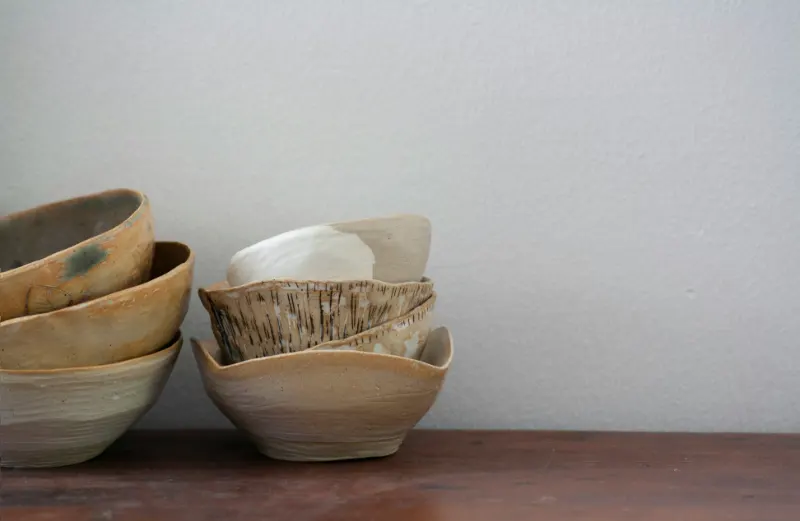
In Japanese tea culture, which helped crystallize wabi-sabi, hosts historically chose bowls that were asymmetrical, with glazes that pooled or ran unpredictably. These vessels slowed the ceremony down. Guests were asked to turn the bowl in their hands, to feel the weight, the rough and the smooth, the thickness of the rim. The lack of perfection became a reason to pause and pay attention.
Translating this into your home does not require Japanese antiques or a strict palette. It requires a shift in what you consider worthy of display. Instead of hiding every sign of age, you might let some things reveal themselves. A wooden floor can keep its scratches; a table can live with a watermark that tells of a dinner party that ran late. Wabi-sabi style, at its most generous, is permission to live fully in your rooms rather than stage them.
There is also an ethical undercurrent here. When you accept that objects will age, and that aging can be beautiful, you are less likely to replace them at the first sign of wear. Repair starts to feel more interesting than disposal. A lamp whose shade has yellowed can be re-covered; a chair can be re-caned or left with a visible mend. The home becomes an ecosystem that evolves rather than a showroom that must be constantly reset.
Seen this way, wabi-sabi is not nostalgia for a simpler time so much as a way of finding calm in the present one. It offers a counterpoint to the constant demand for upgrades by suggesting that depth, not novelty, is what ultimately makes a space feel alive.
Designing for Imperfection at Home
Bringing wabi-sabi style into your home starts less with a shopping list and more with a slowing down of the eye. Walk through your rooms as if you were a guest seeing them for the first time. Notice what pulls your attention. Is it the glossy new surface, or the thing you have owned for years without really looking at it? Often it is the latter that holds the richer story.
Consider your materials. Wabi-sabi leans toward the natural and the tactile because these are the materials that register change: wood that darkens with touch, stone that grows smoother under bare feet, linen that creases and relaxes. If your home is dominated by plastic or high-shine finishes, you do not need to banish them, but you might introduce one or two pieces that will age visibly. A raw-wood stool in the bathroom, a clay vase by the bed, a wool throw on a modern sofa can begin to shift the balance without forcing a complete redesign.
Color, too, can be softened. Rather than selecting a palette from a paint chart and applying it flawlessly, look at the colors already present in things you love: the gray of a well-worn t-shirt, the green of the leaves outside your window, the brown of your morning coffee. Wabi-sabi palettes often echo soil, stone and sky, but what matters more than rules is a feeling of quiet coherence. If a wall is slightly uneven, or a brushstroke is visible, that irregularity can become part of the room’s character instead of a flaw to be sanded away.
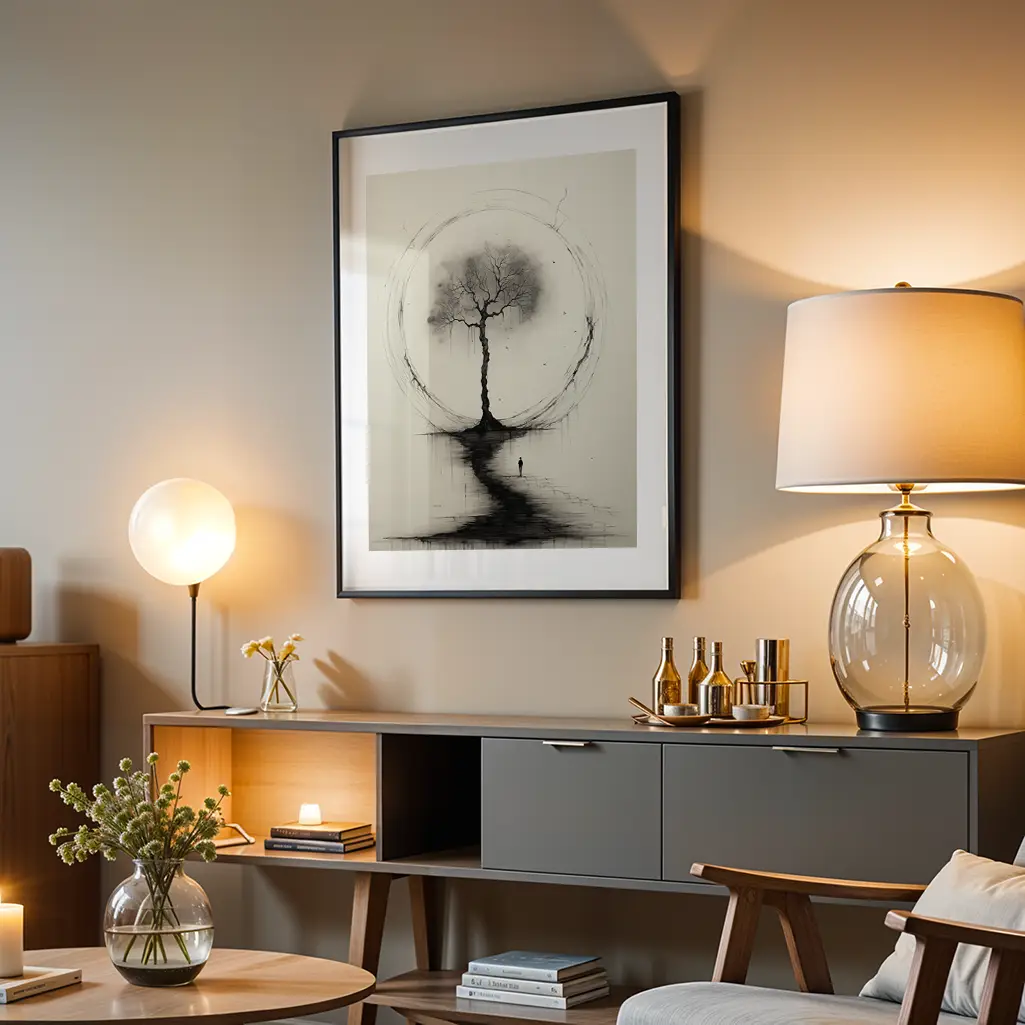
The way you arrange objects is as important as the objects themselves. Instead of filling every surface, leave areas of deliberate emptiness. A single branch in a simple vase, placed on a cleared table, can give the eye room to rest. This negative space is not absence; it is a pause, like silence between notes in music. It makes the few things you do choose to display feel more significant.
Light is perhaps the most wabi-sabi element you already own. Notice how it moves through your space over the day. You might choose to emphasize softer, indirect light rather than constantly washing the room in bright overhead glare. A paper shade that diffuses shadows, or the decision to accept the dimness of early evening instead of turning on every lamp at once, can change the emotional temperature of the home. Imperfect lighting, with its pockets of shadow, invites intimacy.
Wabi-sabi does not mean neglect. Dust still needs to be wiped away; things still need to work. The difference is that you no longer chase a sterile kind of newness. A cleaned but timeworn table, a swept but scarred floor, a neatly folded but faded quilt all meet a standard of care without pretending to be fresh from the store. The home feels tended, not staged.
As you experiment, you may find that wabi-sabi is as much about editing as adding. Perhaps one glossy object leaves, making space for something quieter. Perhaps you keep a beloved piece of furniture that no longer matches a trend but fits your life perfectly. Over time, rooms assembled this way begin to read less like a catalog and more like a portrait. The marks of use, the small repairs, the sun-faded stripes on a rug become evidence that you and your space are aging together, and that there is beauty in that shared, imperfect unfolding.