The Shift From Bare to Barely Enough
“Less is more” has long been the mantra of minimal design, but it has not always been kind. For years, the aesthetic often meant white boxes, sharp edges and a faint sense of being scolded by one’s own furniture. Warm minimalism steps in as a gentler translation: “less, but softer.” It keeps the clarity of minimalism while adding the things a real life needs—texture, warmth, light and a human scale.At its core, warm minimalism is about editing, not erasing. Rather than stripping a room down to the point of echo, it asks a quieter question: “What is essential for this space to feel calm and deeply livable?” This is a shift from visual performance to sensory experience. You still aim for clean lines and open surfaces, but you measure success by how a room feels at 9 p.m. on a Tuesday, not just how it photographs at noon.
Designers sometimes frame the difference as the distance between “gallery” and “nest.” A gallery presents; a nest holds. Warm minimalism acknowledges that we read a room with our whole body. The eye notes negative space; the skin registers the nubbiness of wool, the weight of drapery, the subtle warmth of wood under bare feet. The mind registers whether there is somewhere soft to land a book, a mug, or a restless thought.
To work, this approach requires restraint with compassion. If rigid minimalism can feel like a diet, warm minimalism is closer to mindful eating. You are allowed comfort and pleasure; you simply choose them deliberately. That means fewer pieces of furniture, but each one deeply considered for comfort, proportion and material. It means open floor space, but not at the cost of a place to curl up with a blanket. It means decor, but only where it earns its keep—emotionally, aesthetically or both.
This style is also practical in a small apartment or busy family home, where clutter accumulates almost by default. By building the room around a skeleton of simple, well-made pieces, you create a calm backdrop that can absorb the ordinary mess of living. A single coat tossed over a chair is less visually chaotic when that chair is one of only a few shapes in the room. Warm minimalism is not about never having clutter; it is about your space recovering its composure easily once daily life subsides.
There is a subtle psychological effect at play. A pared-back but inviting room quietly models an internal state: clear but not rigid, open but not exposed. When there are fewer visual demands on your attention, your mind can rest. When the remaining elements are gentle to the senses, rest does not feel like deprivation. You can think of the room as a kind of “external nervous system,” cueing your body to downshift in a way that bright, overfilled rooms rarely do.
How Warm Minimalism Works in Practice
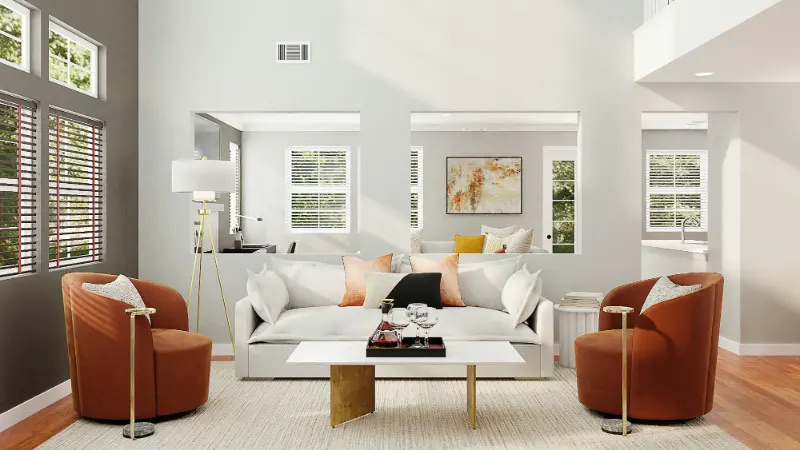
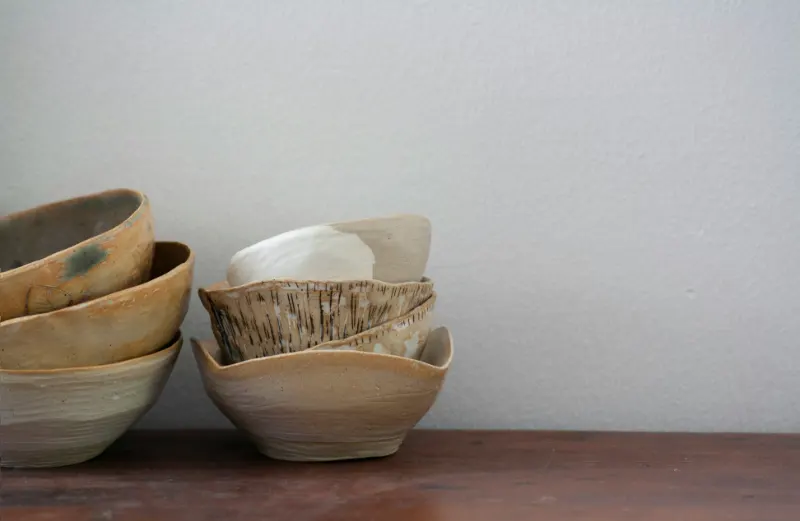
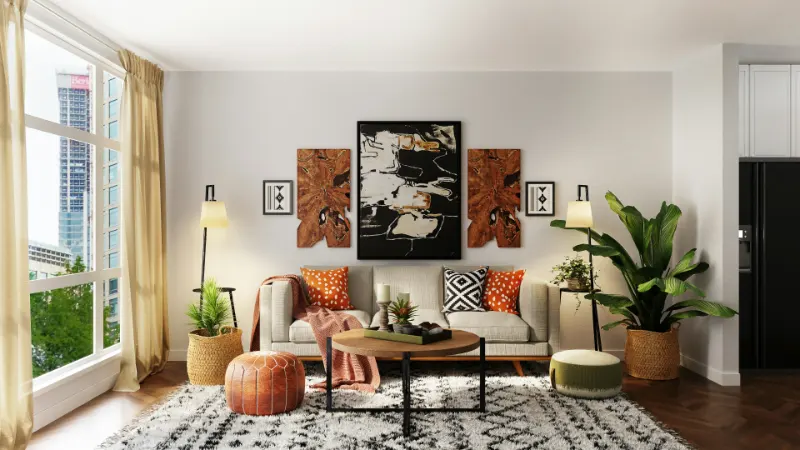
The easiest way to understand warm minimalism is to trace how it handles a few key ingredients: color, material, light and storage. The color palette stays restrained, but not sterile. Instead of stark white and hard black, think of “quiet” colors with a temperature: bone, sand, oatmeal, mushroom, clay, smoke. These are tones that sit softly in your peripheral vision. You might allow one or two deeper hues—ink, olive, rust—but they function like punctuation, not paragraphs.Materials carry much of the emotional work. Traditional minimalism leaned heavily on glass, lacquer and polished metal, which catch the light but can feel slippery and cold. Warm minimalism shifts the balance toward “touchable” surfaces. Wood with visible grain, wool and cotton rather than shiny synthetics, matte ceramics, linen that wrinkles a bit. These introduce micro-variations—tiny changes in texture and tone—that your eye reads as richness even when the overall scene remains simple.
Light completes the picture. Instead of a single, bright overhead fixture, a warm minimalist room usually relies on layers of softer light: a floor lamp that pools on the pages of a novel, a table lamp that warms a corner, sheer curtains that turn harsh daylight into something more diffuse. The goal is to flatten contrast just enough that you do not feel “on display” in your own home. A dimmer switch may be one of the most minimal yet generous upgrades you can make.
Storage is where the style reveals its discipline. Warm minimalism does not show you everything it owns. Closed cabinets, baskets and low credenzas allow daily life to be tucked away, preserving the visual quiet that defines the aesthetic. But the storage itself participates in the room’s warmth. A simple oak sideboard with rounder edges, a woven lidded basket, a fabric-covered box in a soft tone: each is both practical and gentle to the eye.
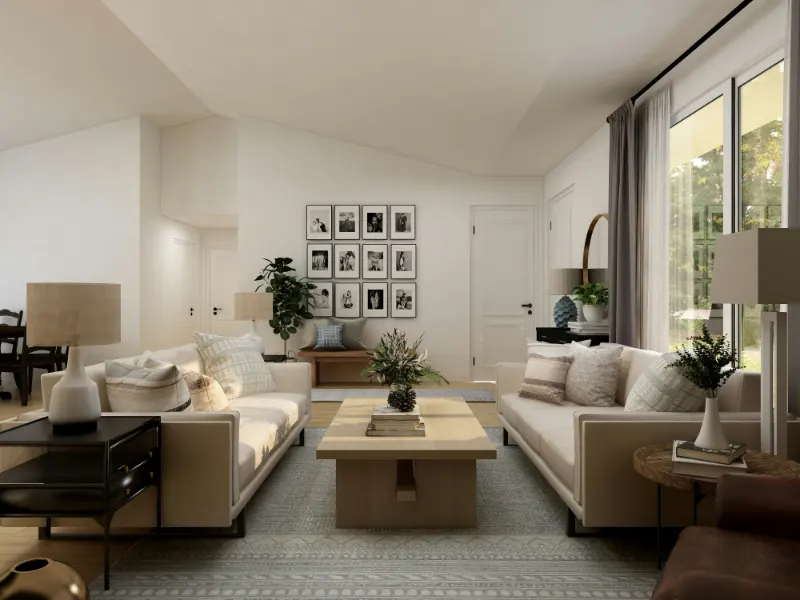
Furniture choices lean toward clean silhouettes with softened details. A sofa might have straight arms but deep, inviting cushions. A dining table may be rigorously simple in shape, yet crafted from a wood whose surface records faint traces of use. The aim is to avoid the extremes of either “museum piece” or “overstuffed relic.” You want pieces that seem to exhale, not pose.
Designing a Warmer, Calmer Home
Translating warm minimalism into your own space starts less with shopping and more with editing. Instead of asking what to buy, begin by asking what can gently leave. Remove a few small decorative items from a surface and notice how the remaining objects gain presence. Clear a hallway of an extra table and pay attention to how your body moves more easily through the space. Subtraction is a sensory experiment, not a moral judgment on your belongings.Once the room has “space to breathe,” you can add warmth with intention. If you have a neutral sofa, a single textured throw in a subtle color can do more work than a pile of patterned cushions. Bare windows might gain simple linen panels that soften the outline of the frame. A bright white wall might come down a half-shade into a warmer neutral, so that daylight glows rather than glares. These are small moves with outsized psychological effects.
Art and personal objects are where warm minimalism avoids drifting into anonymity. The style does not ask you to hide your life; it asks you to curate its evidence. A single framed photograph at the right scale can anchor a wall more powerfully than a crowded gallery of mismatched frames. A hand-built vase, even empty, can hold a place of honor on a cleared shelf. The idea is to choose pieces that feel like sentences in a story you are still interested in reading.
Over time, living with warm minimalism becomes a conversation between your habits and your space. You may find that you need fewer chairs for visitors than you imagined, but a better reading lamp by the bed. You might notice that a certain catchall tray on the entry console keeps mail from blooming into chaos. The style is not a rigid recipe; it is a framework for ongoing adjustment, based on what makes your home feel quietly generous rather than merely orderly.
Ultimately, warm minimalism succeeds when you can walk into your home and feel both lighter and more grounded. The room holds only what serves you, but it does so with a softness that invites you to sit down and stay awhile. In a world that constantly asks for more—more stimulation, more objects, more speed—a space that offers “just enough, gently” can feel like a radical kind of luxury.