The Quiet Science of Soft Light
Soft light is often described as "flattering" or "cozy," but what it really shapes is how your nervous system behaves at home. Hard overhead light, the kind that carves sharp shadows across a room, keeps your brain on alert. Soft light blurs those edges. The difference is not just visual; it is physical, hormonal and emotional.
Your eyes do not experience light as a simple on or off switch. They are reading direction, color temperature and intensity all at once, then feeding that information straight into the brain regions that regulate focus and rest. Harsh, single-point light creates high contrast: bright highlights, dark corners, a sense of drama that is useful in a gallery or a stage but often exhausting in a living room. Soft light, by contrast, scatters. It comes from larger or multiple surfaces, wraps gently around objects and people, and reduces the drama into something your body reads as safe.
From an interior design perspective, this is why a bare ceiling bulb can make an expensive sofa feel cheap, and a simple shaded lamp can make a modest room feel quietly luxurious. The quality of light determines how texture and color read. Linen looks softer, wood looks warmer, wall paint looks deeper and more nuanced when it is washed in diffused, low contrast light. You notice fewer imperfections and more layers.
There is also the question of color temperature, measured in kelvins. Daylight at noon can be a crisp blue white, while late afternoon leans golden and soft. Your circadian rhythm is tuned to this daily arc. Cool, intense light signals daytime alertness; it is good for offices and task work. Warm, dimmer light signals the onset of evening and rest. When your home is bathed in cool, bright overhead lighting at night, your body is quietly confused, nudged into a state between work and rest. Soft, warmer light helps close that loop, telling your body "the day is winding down" without a word.
Psychologically, soft light shortens the distance between people. Harsh light tends to flatten faces and amplify micro details, the way a dressing room overhead fixture can turn even the confident into the self critical. Softer, side or shaded light restores depth and gentleness to expressions. It is easier to relax into a conversation when your features are not being interrogated by the room. In this way, soft light does not just calm you; it calms the space between you and everyone else in it.
In a quietly radical way, you are not simply decorating when you choose lamps and shades. You are choosing how your mind will transition from day to evening, from doing to simply being. Lighting is the architecture of mood, and softness is one of its most powerful tools.
Designing Soft Light: From Ceiling to Corners
Designing soft light begins with a simple shift in priorities: away from lighting the whole room evenly from above and toward creating pockets of gentle glow. Instead of thinking in terms of a single master switch, imagine your space divided into zones of activity and rest, each with its own lamp or fixture.
One of the most effective changes you can make is to dethrone the ceiling light as the star of the room. Overhead fixtures are useful for cleaning, working or searching for lost keys, but they do not need to define the evening atmosphere. Treat them as a functional layer you dial down or off at night, in favor of table lamps, floor lamps and wall sconces that place light closer to eye level and below. This change alone softens shadows and instantly makes a room feel more intimate.
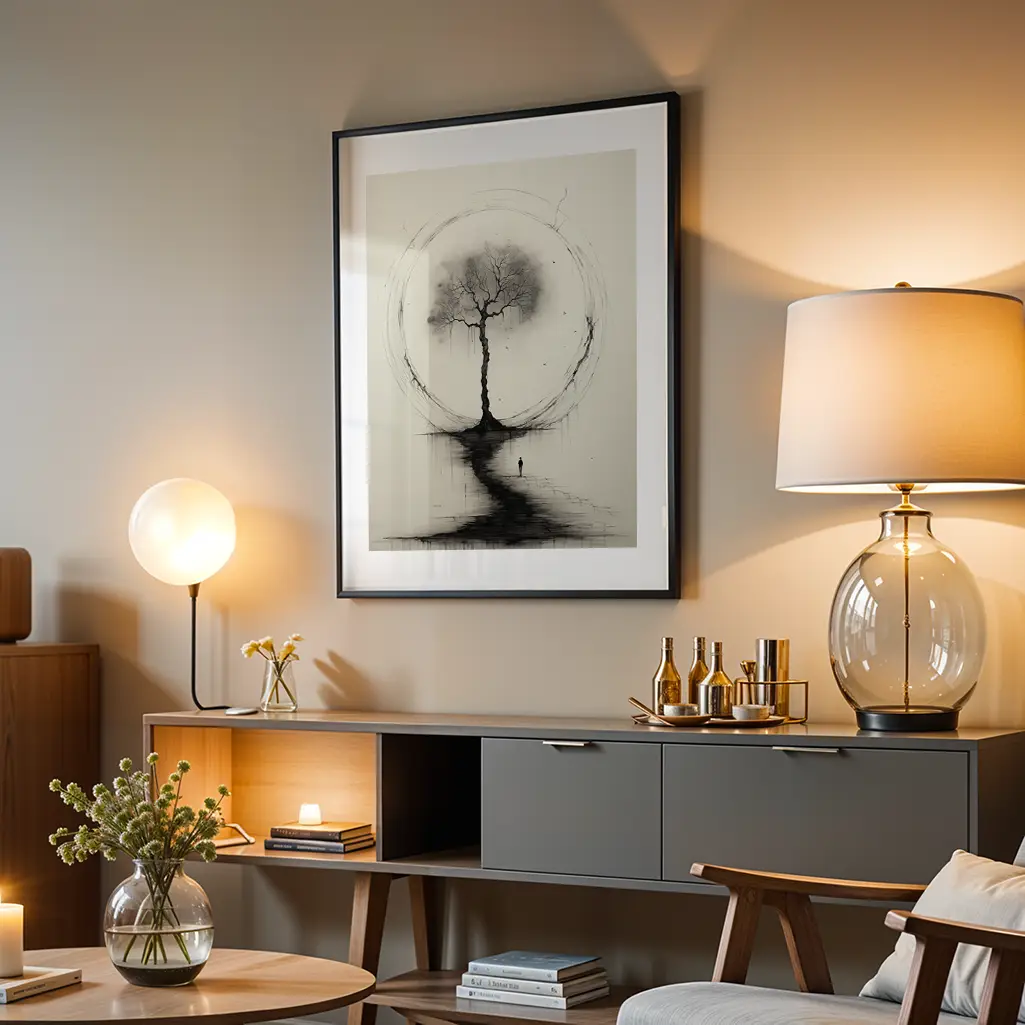
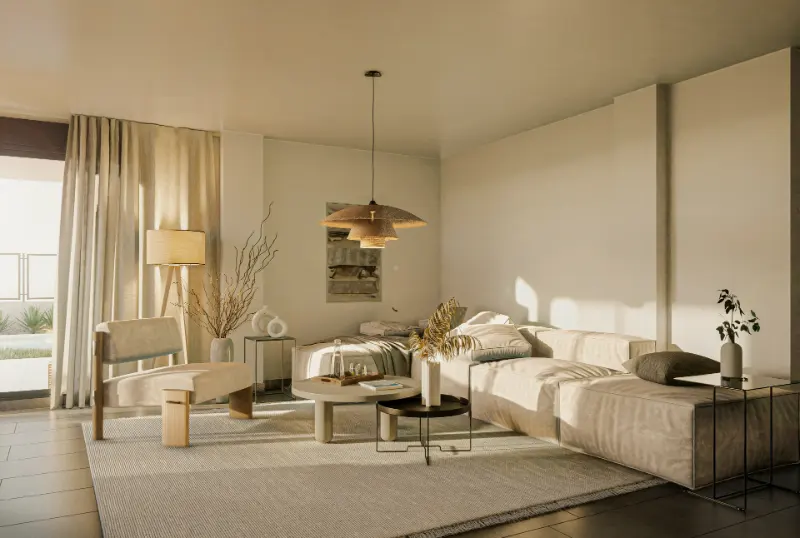
The way light leaves a fixture matters as much as where it is placed. Opaque or fabric shades diffuse and scatter brightness, turning a single bulb into a wider, softer source that bathes rather than pierces. Glass globes, paper lanterns and pleated shades all create versions of the same effect: they stretch the point of light into a surface of light. When you stand in a softly lit room, you are often being illuminated not directly by the bulb, but by the surfaces it bounces from.
Color temperature again plays a quiet yet decisive role. In most living spaces, a warm white range feels most calming. You can push slightly cooler in kitchens or work corners, where clarity is useful, but avoid mixing extremes in the same sight line. A cool blue white lamp next to a golden one makes each feel a little wrong. Consistency across a room lets your eyes and mind relax. Where you do want contrast is in intensity, using dimmers or lower wattage bulbs to give each fixture a comfortable, non glaring presence.
Surfaces themselves become collaborators in soft light. Matte walls diffuse; glossy ones reflect sharply. A cream or pale gray wall will bounce lamplight back into the room, creating an ambient glow out of a single source. Darker walls absorb more, which can be beautiful if you compensate with more points of soft light. Textured materials such as plaster, rattan and raw wood break up reflections, making light feel tactile and layered rather than flat.
Think, too, about where light originates in relation to the body. Downlight from a high ceiling tends to emphasize the tops of heads and cast shadows under eyes. Light from mid height, such as a shaded lamp near a sofa or a sconce beside a bed, feels closer to the human scale. It reads less like a command to stay awake and more like an invitation to linger.
Room by Room: Building a Calmer Evening Ritual
Every room offers a chance to refine how soft light supports your daily rhythms. Start with the living room, often the emotional center of the home. Here, aim for multiple gentle pools of light instead of a single wash. A lamp by the sofa, a floor lamp in a reading corner, and perhaps a low, shaded piece on a sideboard give you a palette to adjust according to mood. The question to keep asking is not "Is it bright enough?" but "Does this feel settled?" If you find yourself squinting at dark corners, add a small source. If the room feels exposed, choose dimmer bulbs or deeper shades.
In the bedroom, softness becomes even more crucial. Overhead light should be the least used in the evenings. Bedside lamps at or just below eye level, with warm bulbs and opaque or fabric shades, create a cradle of light that holds the room without flooding it. The goal is a gradual tapering of brightness from the doorway to the bed itself, so that each step deeper into the room feels like a step away from the day. If there is a mirror opposite a light source, watch how it doubles intensity; shifting the angle of lamp or mirror can often restore calm without buying anything new.
Kitchens are a special case, blending task and atmosphere. Under cabinet strips, when softened by diffusers and slightly warmer bulbs, can create a gentle glow across counters that feels far less clinical than a single overhead fixture. A small lamp in a corner, even on a shelf, immediately makes the room feel less like a workspace and more like part of the home’s evening landscape. You want enough clarity to cook safely, but pockets of warmth that let the space transition into a place to sit with tea long after dishes are done.
Finally, remember that soft light is not only artificial. Sheer curtains that filter daylight, reflective yet matte surfaces that bounce the sun deeper into a room and considered use of plants to break up glare all contribute to a calmer daylit atmosphere. The way you manage light from morning to night creates the emotional weather of your home. Hard light has its place, in short tasks and active hours, but it is the soft light, thoughtfully layered, that carries you gently toward rest.