The Quiet Logic Behind Zen Interior Style
Zen interior style is less a look than a way of relating to your space. At its core is a simple idea: your rooms are not a backdrop for your life; they actively shape how your nervous system feels. A space that is visually noisy keeps your mind in a low hum of vigilance. A space that is coherent, spacious and gentle gives your body permission to exhale.
Where typical design chases novelty, Zen interior style chases clarity. It borrows from Japanese aesthetics and Zen practice but is not a rigid set of rules or an imitation of a temple. Instead, it works through a few quiet principles: reduce what is nonessential, emphasize natural light and materials, and make emptiness feel intentional rather than unfinished.
Think of it as subtractive design. You are not decorating a blank box with interesting things; you are carefully deciding which few pieces deserve to stay, and then allowing space to form around them like white space around a paragraph. That space is not wasted. It becomes a form of visual breathing room, the negative that makes the positive legible.
The psychological effect is real. Visual clutter forces your eye to keep scanning, triggering a low level of cognitive load. Harsh lighting and loud colors stimulate the nervous system. Uneven surfaces and chaotic layouts fragment your sense of orientation. Zen interior style answers each of these stressors with its opposite: simple sightlines, soft but clear light, textures that invite touch, and arrangements that make movement feel natural. The room gently tells you what to do: sit here, rest here, breathe here.
To work, this style must be honest about your actual life. A perfectly minimal living room that cannot hold your books, laundry or children will only create a new layer of tension. The goal is not aesthetic purity; it is alignment between how you live and what your space quietly suggests. If you read on the sofa every night, the Zen version of that room does not hide the habit. It dignifies it with a well placed lamp, a reachable shelf and a throw that feels like a small ritual when you sit down.
Calm Through Light, Material and Layout
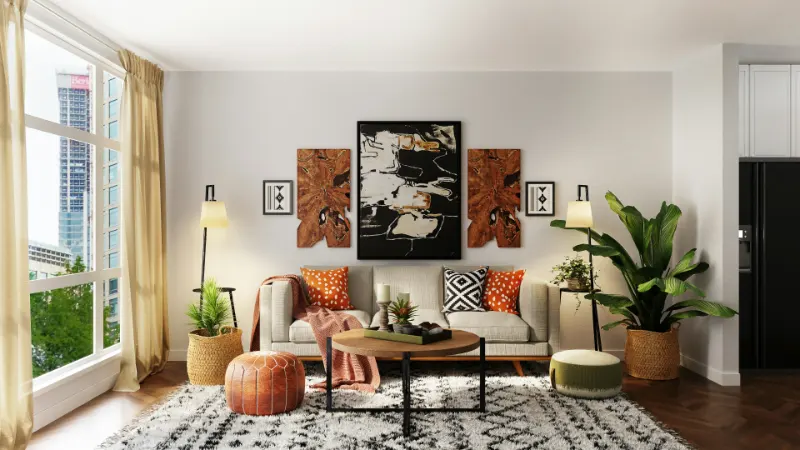
Zen interior style begins with light. Open the curtains fully and notice how daylight actually lands in the room. Instead of scattering lamps everywhere, think in terms of layers. During the day, do as little as possible to interrupt natural light. Sheer curtains that diffuse without blocking, light walls that bounce brightness, and low, non reflective furniture allow sunlight to become the main actor. At night, rely on a few warm, indirect sources rather than a central glare. A floor lamp washing a wall, a table lamp at eye level near a chair, and a small glow near the bed are often enough. The aim is “soft clarity”: you can see easily, but nothing feels interrogated.
Material is the second lever. Zen spaces typically favor wood, stone, linen, cotton, wool and paper. You do not need a full renovation; you can shift the mood through surface contact points. A wooden or cork tray on a glossy coffee table, a linen duvet on a synthetic mattress, a wool or jute rug on tile, even a paper shade around an existing bulb, all tilt the room toward natural tactility. The more your hand touches something that feels grounded, the more your brain locates itself in the present.
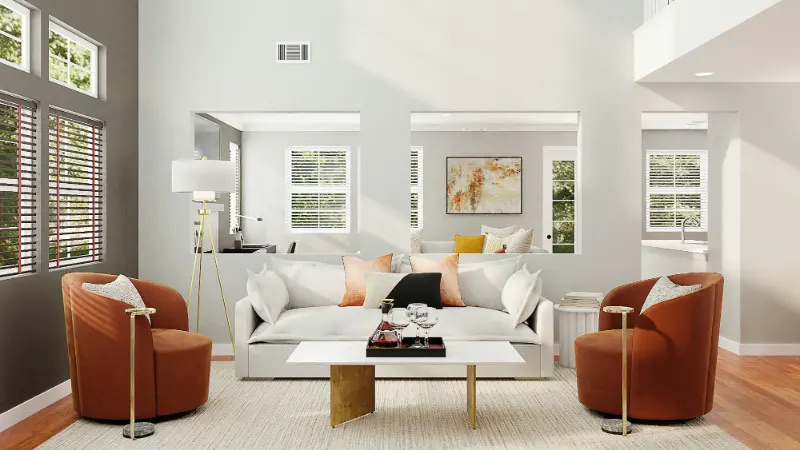
Color follows material. True Zen interiors gravitate toward a palette of off whites, warm grays, sand, clay and muted greens, not as a style rule but as a way of quieting the visual field. You do not have to abandon color, but you can treat it like an accent rather than a shout. One deep indigo cushion on a neutral sofa or a single rust colored throw on a pale bed has more emotional weight than several competing hues. The room reads as calm first, personal second.
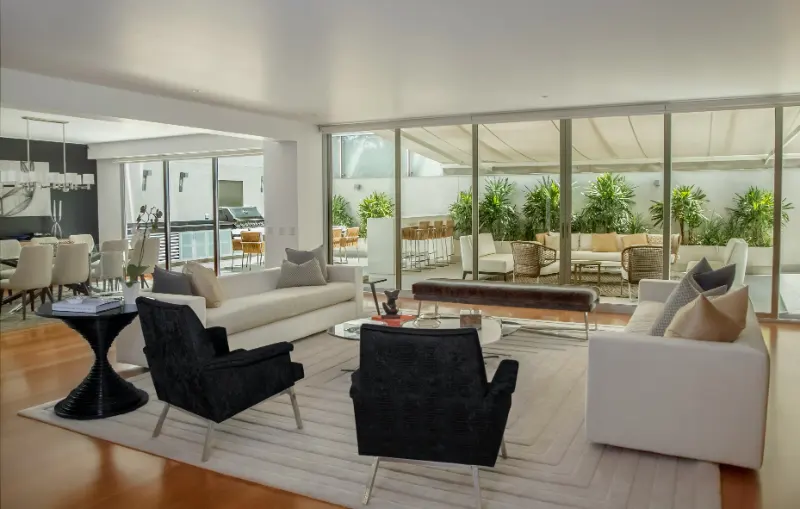
Layout is where Zen interior style translates into daily behavior. Instead of asking how to fit the most furniture into a room, start with one question: what is the primary activity here. If it is conversation, let two chairs and a sofa face one another with space between, and resist the urge to fill the center with a heavy table. If it is rest, give the bed a clear path on at least one side and keep large objects away from the headboard so that the wall above your head feels open. The body reads these spatial cues unconsciously. A congested path tells you to squeeze and sidestep. A clear path tells you you are allowed to move freely.
Storage, too, becomes a design decision rather than an afterthought. Open shelving packed to the edge keeps the eye busy. In a Zen interior, what is often displayed is edited to a few meaningful, well spaced objects, while closed storage quietly holds the rest. A single low cabinet with doors can make a wall feel calm in a way that no amount of styling can accomplish on exposed shelves. This is not about hiding your life out of shame; it is about shielding your attention so that you see only what supports the present moment.
Ritual, Imperfection and a Lived In Calm
Once the big moves are in place, the finer grain of Zen interior style appears in how you treat small daily actions as rituals. A simple ceramic tray near the door for keys, a shallow bowl on a console for mail, a cushion in a corner where you sometimes sit and breathe for five minutes, these are not decorative flourishes; they are tiny agreements with yourself about how you want to live. The room becomes a collaborator in those habits.
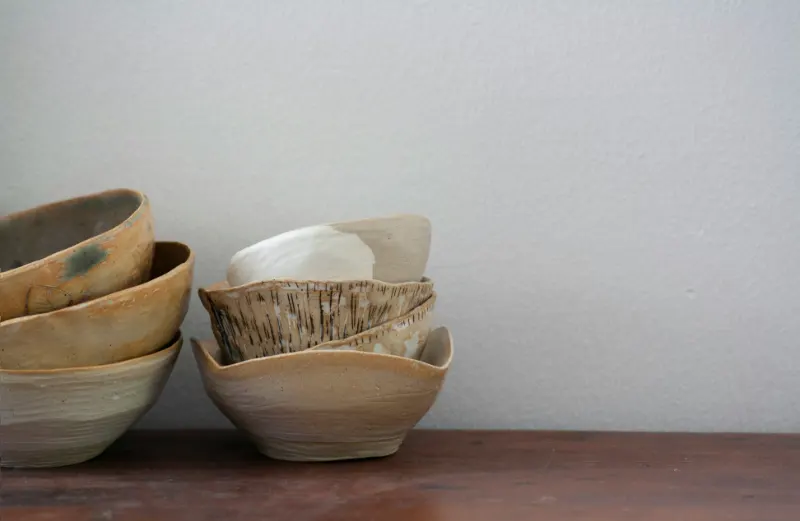
Texture plays a quiet role here. Smooth and rough, matte and slightly glossy, cool and warm all have different emotional tones. A perfectly flat, uniform space can feel sterile; a completely rustic one can feel heavy. Zen interiors often balance a smooth backdrop with a few tactile interruptions: a nubby throw on a clean lined sofa, a hand built mug on a crisp table, a slightly uneven vase catching the light on a windowsill. These small irregularities keep the room from becoming a showroom. They introduce “wabi sabi,” the appreciation of imperfection and impermanence, into an otherwise orderly environment.
The most overlooked aspect of a calm home aesthetic is permission for change. A Zen space is not frozen at its most photogenic moment. Plants grow, books accumulate, cushions shift. The point is to make adjustment easy rather than burdensome. Light furniture that one person can move, art that can be rehung without ceremony, modular storage that can expand or contract, all allow the room to evolve as your life does. When change is simple, you are more likely to keep refining instead of letting clutter ossify in corners.
Ultimately, Zen interior style is a conversation between your mind, your body and the objects that surround you. You do not have to own tatami mats or a rock garden. You simply have to look at each item and ask whether it adds to or subtracts from a sense of calm. Over time, that question becomes instinctive. You will notice, without quite knowing why, that a certain chair feels better when turned slightly toward the window, or that the room relaxes when you remove one extra cushion.
In that sense, the calm home aesthetic is not an endpoint but a practice. You arrange, you live, you notice, you adjust. What emerges is a space that does not shout its style yet quietly supports who you are when you finally put your phone down, close the door and let the outside world fall away.